The Electrum Archive is Prescription Medication
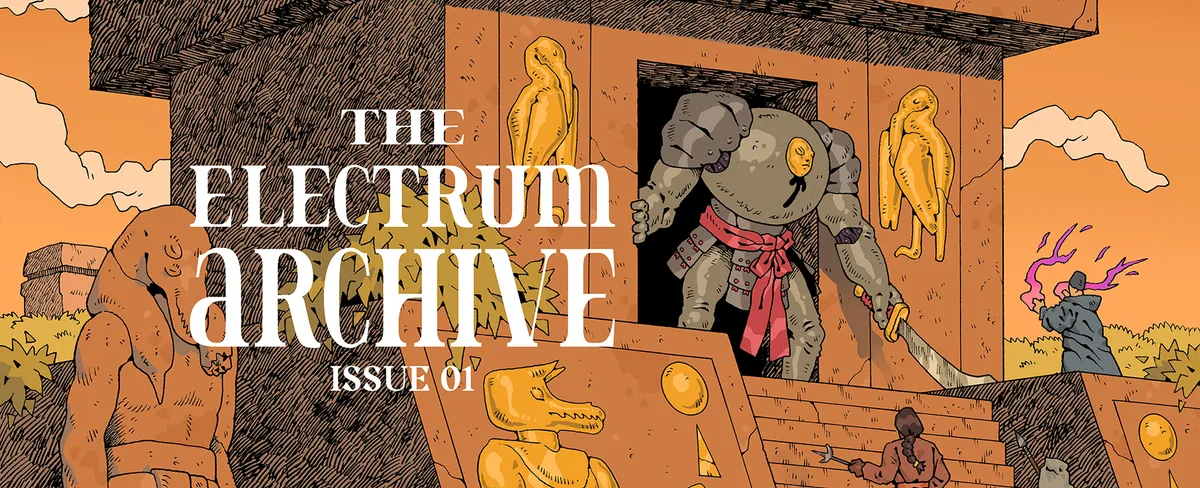
Time is eroding the Grognards. Their children are growing strange.
The OSR's long-standing obsession with optimizing for the allegedly shared cultural touchstone of 80s D&D through grounded, mostly backwards compatible adventuring rules now shares the spotlight with Capsule Games - all-in-one system and campaign packages designed to satisfy their authors’ unique tastes as much as the hobby’s wider audience.1
The Electrum Archive is one such descendant, born through the same innocent enthusiasm as any other overly ambitious D&D home game. Unlike the naive past selves of most DMs reading this, Emiel has the skills necessary to make good on his lofty promises. While this game’s quality has been rightfully praised for many years now, its quiet ambition has not yet gotten its due.
Let’s change that.
Issue 1
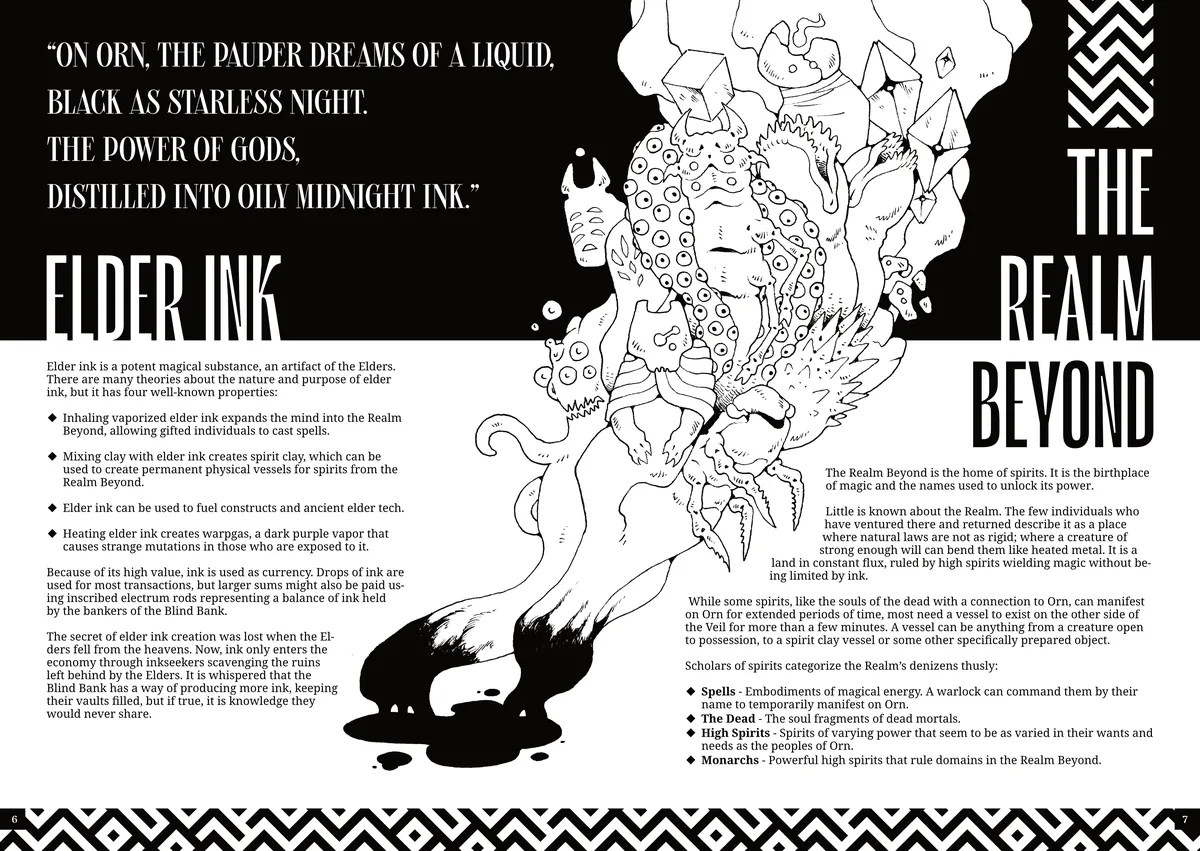
Sixty-eight pages evenly split three ways between core rules, a broad setting, and the most crucial DM tools. It’s a style of book you’re probably familiar with by now.
The black and white layout is effortlessly beautiful. Every page is a reminder that creating a gorgeous book has more to do with the consistent application of well-documented principles than unique artistic talent. Emiel’s art direction background is on full display, weaving together his own illustrations with the likes of Silverarm veteran Logan Stahl, Tom Duijm, and Charles Ferguson-Avery. The resulting blend is so effective that on first read I assumed every piece was by the same illustrator.
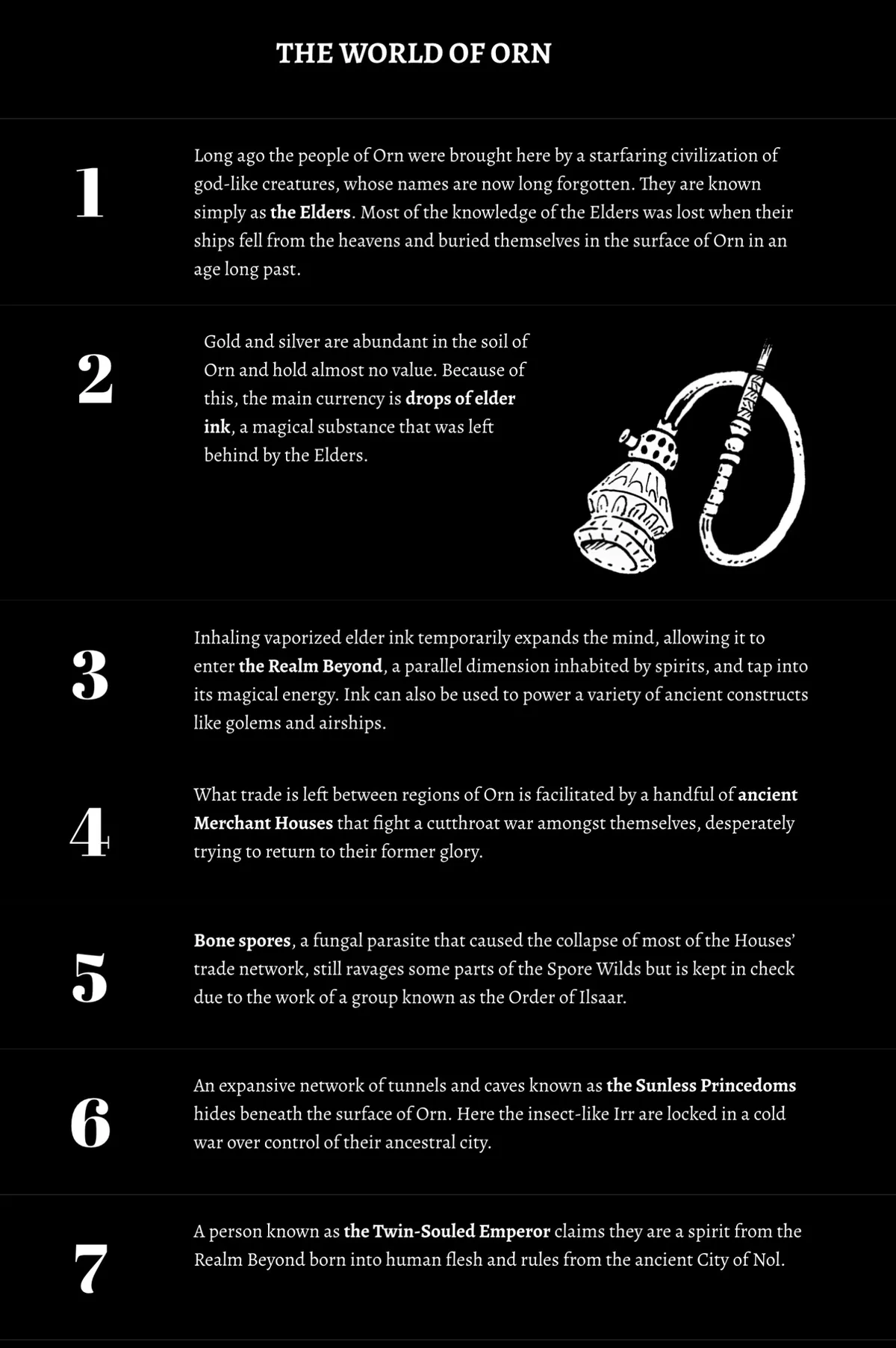
The book is lore forward but not lore dense. Its seven core principles are the first content you encounter in the booklet. They're also front-and-center on the game’s marketing.
The severity of your personal lore fetish is the best yardstick for whether or not The Electrum Archive is your jam. How do you feel after reading sentences like “During the Nollish Exodus, they leave Maldrazagar and use their newfound magic to construct Nol, City of Sorcery in the Spirit Roads”? Do proper nouns like “The Umbral Bazaar” and “The Mycelium Consciousness” make you rock hard? The book does a great job of evoking that sort of breathless, out-of-fashion 90s worldbuilding without falling into irrelevant tedium. Lancer this is not.
The six major factions were particular highlights. Trade houses, a sentient plague, petty spirits posing as gods - it gave me Dragon Age: Origins flashbacks. Their mutually-exclusive setting-wide ambitions makes each easy to bring up in play and attaches enormous implications to their dominance or destruction.
The core system is a smart and lightweight pack mule game2. Five stats; the standard six with strength and constitution merged and stealth spliced into the charisma analogue (“Mask”) to balance dexterity. Numbers start low and stay low across eight levels of advancement, with d10s supplanting the d20 as the default resolution die.
First level characters succeed on the average check about 30% of the time, though luck and a complementary background can double that. Like Knave and Mothership, the system stacks the deck against players to incentivize lateral thinking. All familiar mechanics, seasoned to one man’s niche taste.

Three classes - Fixer, Vagabond, and Warlock. Their names say more about the system’s core loop than I ever could.
I was surprised to find a traditional leveling system with semi-randomized XP distributed via the post-session question procedures of Dungeon World.3 The character advancement options are very traditional - double damage on backstabs, 5e’s battle master fighter maneuvers - and cap character strength at around level 4 to 6, in D&D terms. No multi-classing.
Each level you’re given the option to forgo hp growth for a second ability score advancement; a bold choice in a game with 2d4 starting hp. Hitting zero is a 50/50 shot at instant death or permanent debility.4 In a world where swords deal a d8, damage armor is a necessity, not a choice.
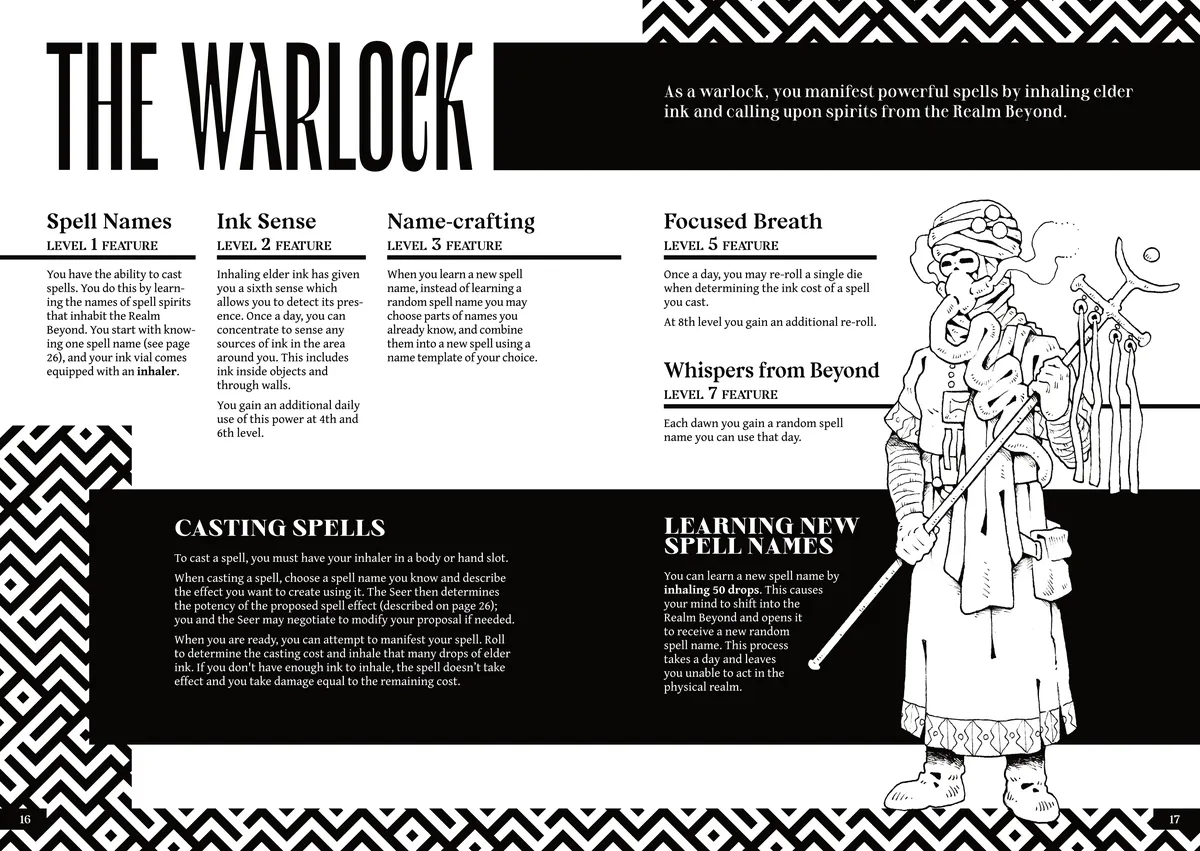
Most discussion of the game’s mechanics centers around its spellcasting system - randomized spell names à la Maze Rats whose potency is negotiated with the GM and assigned one of four different semi-random ink costs. Parlor tricks cost pocket change. A resurrection costs a year’s pay. If you roll a higher cost than you can pay, you take the difference as damage.
I love this system to death - which is why I’m all the more annoyed to learn that it’s exclusive to Warlocks. I’ve no issue with magic-specialist classes, but I prefer to give every player equal opportunity to make deeply unwise decisions.
My favorite feature of the system is instead its fusion of 2e’s weapon speed rules with Into the Odd’s omission of attack rolls - “Speed Sandwich”. Each turn, after player actions are declared, an X-in-10 speed check is rolled. Those who succeed go before the enemy, those who fail go after. Your odds of success vary by the weight of your weapon - a 1d4 damage dagger has 8/10 odds, while a 2d6 greatsword lumbers with 3/10. Though far from a unique innovation, this mechanic has been a welcome solution to the dogpiling issues in my Mythic Bastionland games.
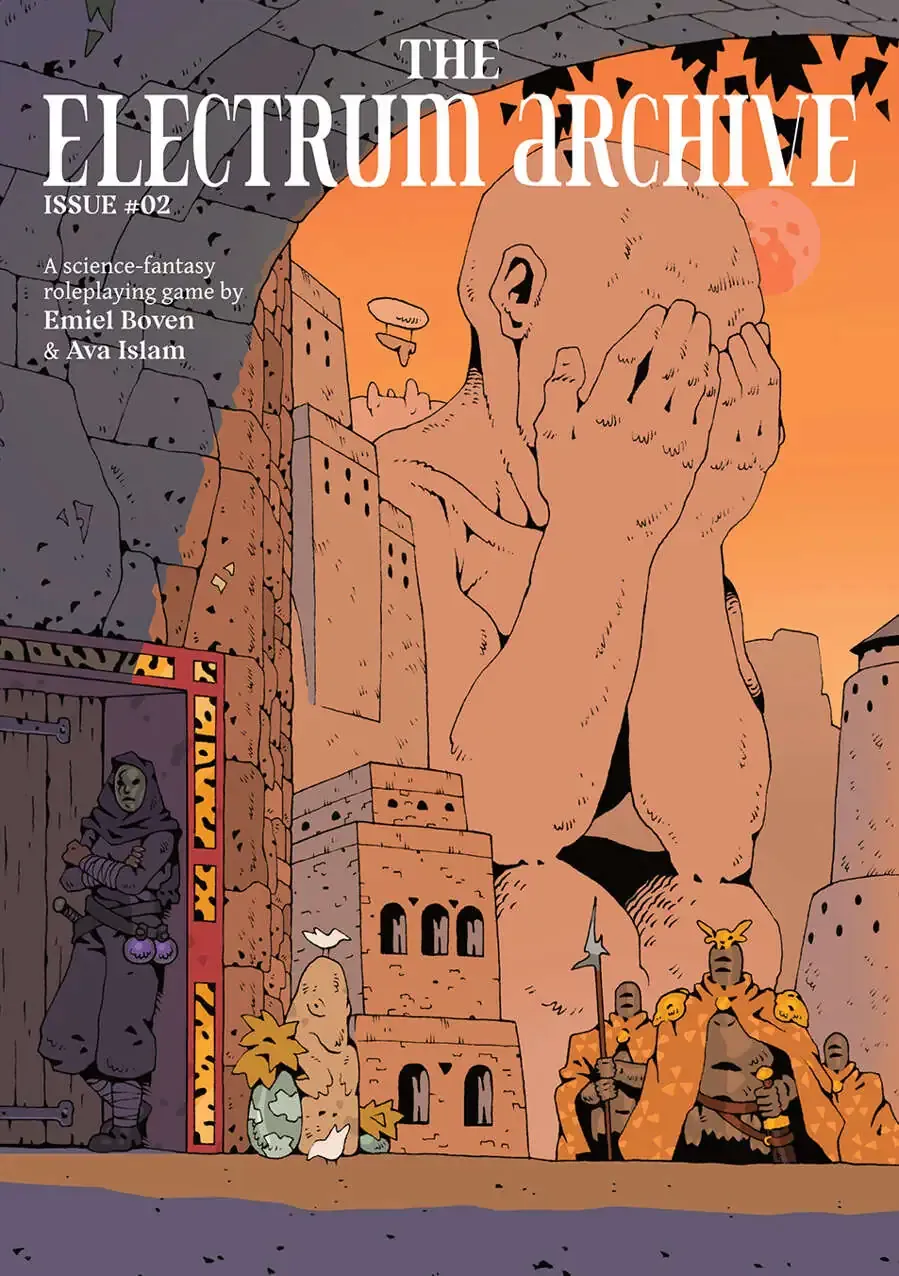
Issue 2
I suspect I’ve lost the OSR-skeptical among you by now, but if any of you yet linger I’d like to take a moment to sympathize with your boredom. I’ve just spilled a lot of ink talking about lore and combat rules. If that was the extent of The Electrum Archive’s offerings, I would not be blogging about it. I’ve never found Morrowind-adjacent fantasy aesthetically interesting5, and its competition is stiff.
The second issue is what convinced me that this ongoing project is worth ongoing attention.
Seventy-six pages, zoomed all the way in on life in Titan Port, the de facto starter city in Orn’s Electrum Sea. Crucially, this is not a new location. It’s not adventure DLC shoehorned into a world that was already written to be complete. Instead, Emiel is taking a microscope to content he already introduced, supporting it with new game procedures, a dungeon crawl, and an intricately detailed heist scenario.
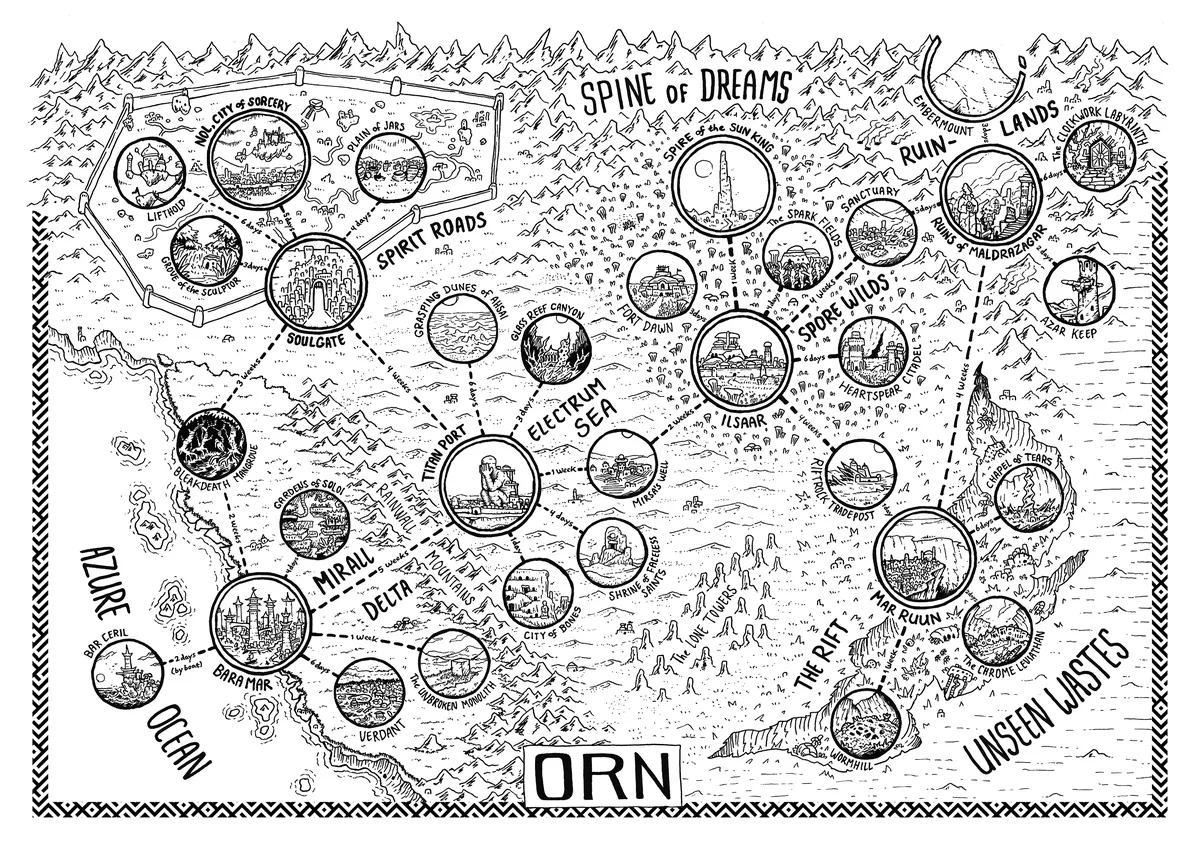
Issue 2’s existence commits Emiel to a frankly bonkers implied promise - that one day, each of those big circles on Issue 1’s world map are going to receive their own sandbox module.6 Over time, Orn will morph into one weirdo’s fantasy google street view. If we support him enough to keep that passion burning, he is going to map every building on the entire continent. Ultimate Legwork.
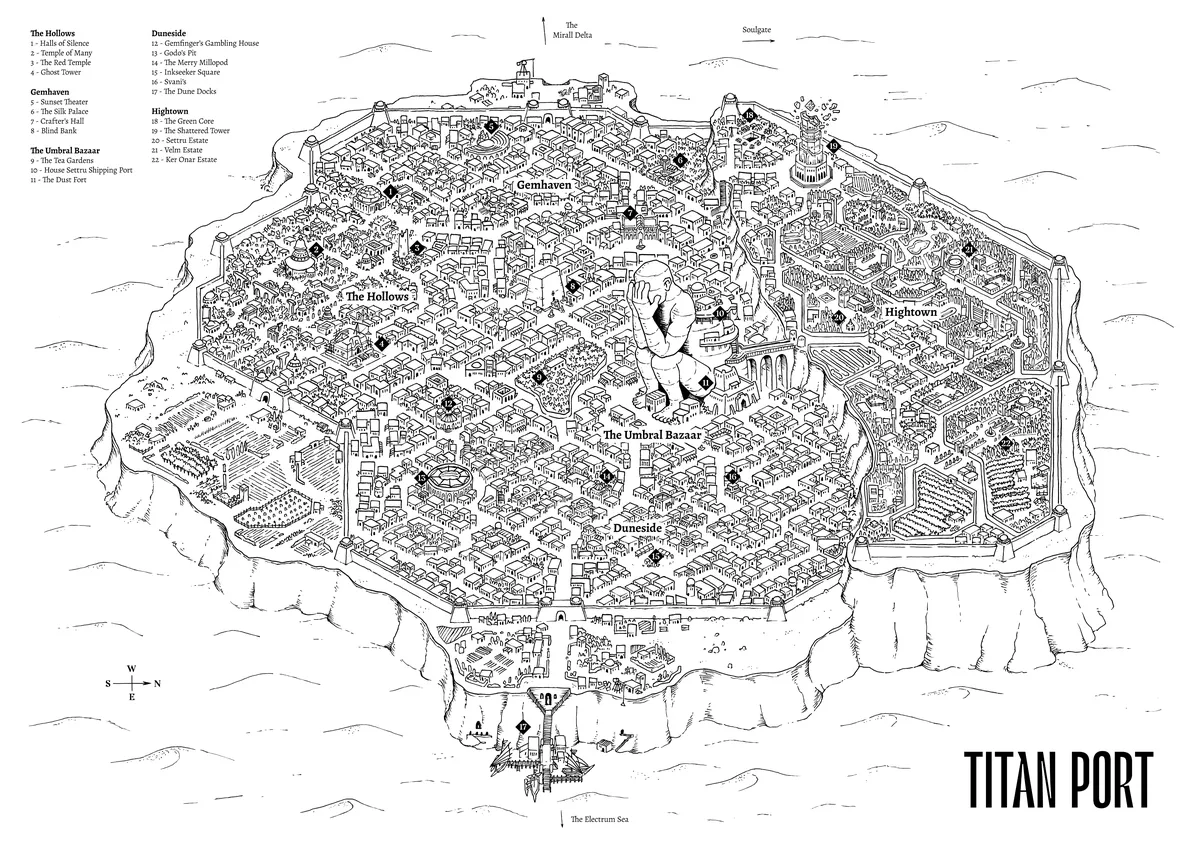
Of course detail for detail’s sake is not useful, which is why I’m so happy to report that the second issue nails the proper level of city abstraction. Five districts, each limited to a single page detailing its common sights, smells, sounds, and notable buildings. I particularly love the “Happenings” tables, which describe how the neighborhood's vibe changes at morning, noon, and night.
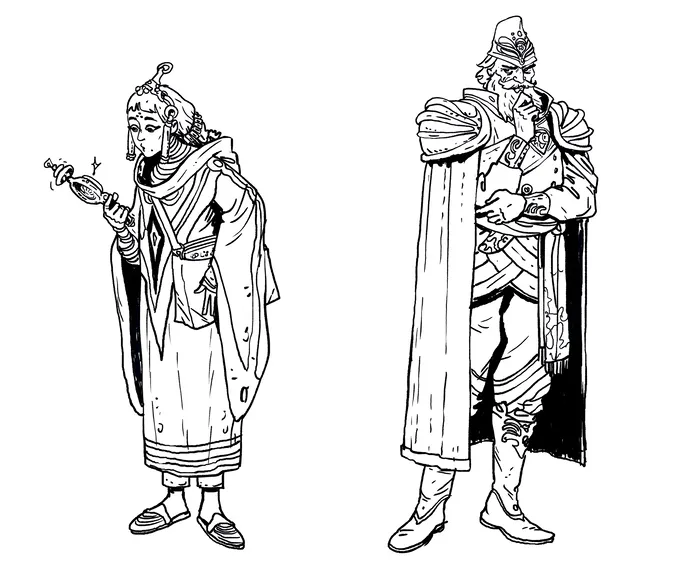
The new character illustrations from half a dozen new collaborating artists also add a wonderfully human touch absent from the prior issue’s distant perspective. The entire cast of “The Tower of Tursar Settru”, its heist scenario, are vibrant and gameable.
The credits section has ballooned since issue #1, a testament to the project's snowballing success. The pages at times feel less like the work of one man than the practical implementation of Knock!’s collective wisdom. Each mechanic is safe and familiar, yes, but it’s rare to see all of them implemented well in the same creative work.
It’s here, however, where I also see the biggest crack in The Electrum Archive’s armor - rules bloat. The majority of new toolbox systems included - like downtime actions, hirelings, and spell crystals - are welcome additions. But I foresee issues with the fiddlier rules changes included, like the alternative class level up benefits, should such tinkering become the norm.
Done is a myth and everything could always be better. An ongoing project should live with the consequences of prior sub-optimal choices instead of shoehorning a fix into later releases.7 I don’t want my players to need to reference four different splatbooks during character creation. If a truly gamebreaking issue is found, errata the first issue and add the change to its next print run.
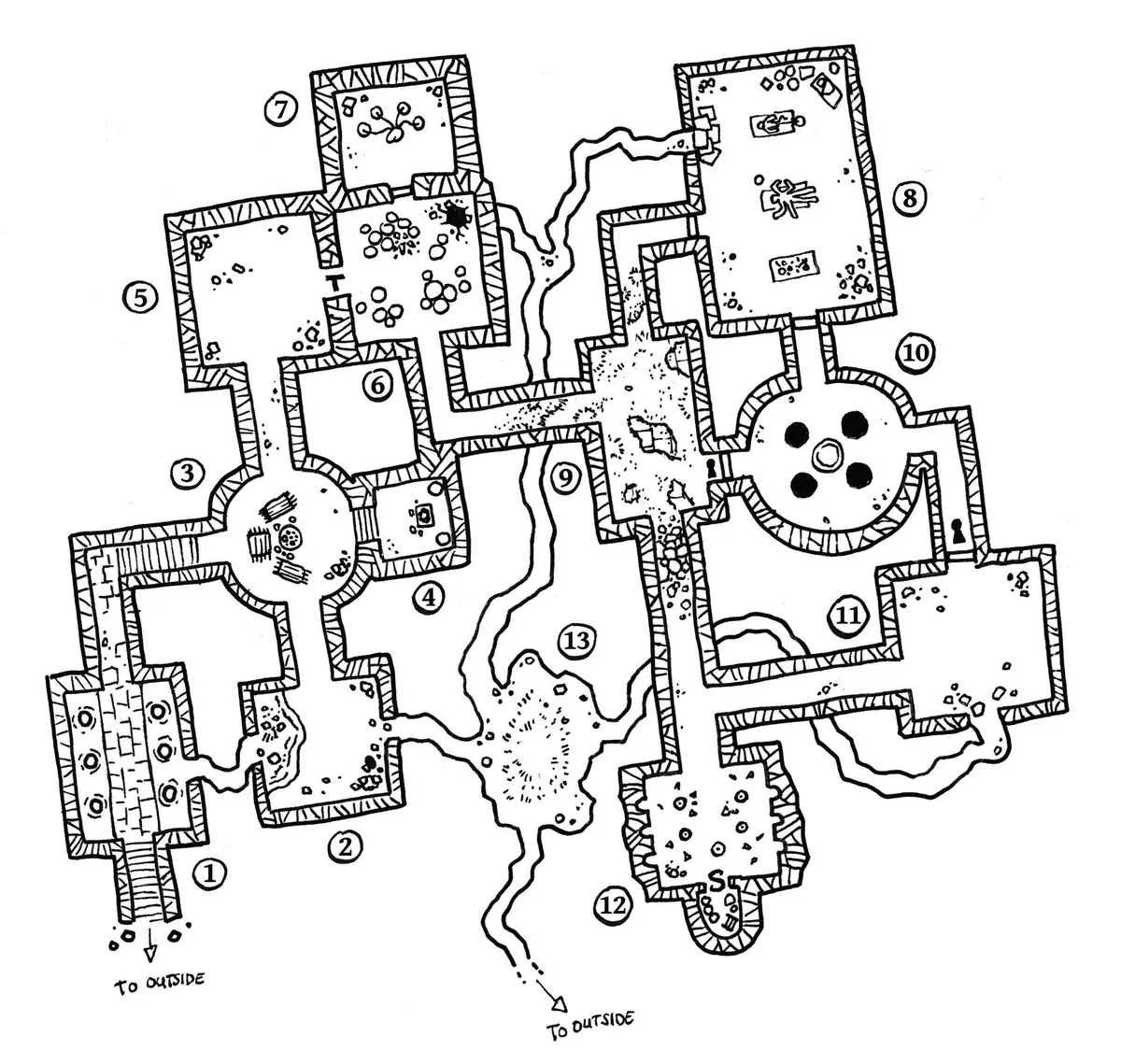
As for the included adventures themselves... they're fine? Great art, fun player-facing handouts, expert layout, but thematically just playing the hits. A cursed altar, a tomb full of rats, a security golem. The heist’s villain is an old gay nepobaby; big fan of that.
I’m really not the target market for this sort of content anymore, but I’d be a fool not to recognize it as an excellent implementation of a classic premise. I suspect many of you will enjoy these adventures more than me. Personally, I’m holding out hope for a future Unbroken Monolith scenario that gets REAL freaky.
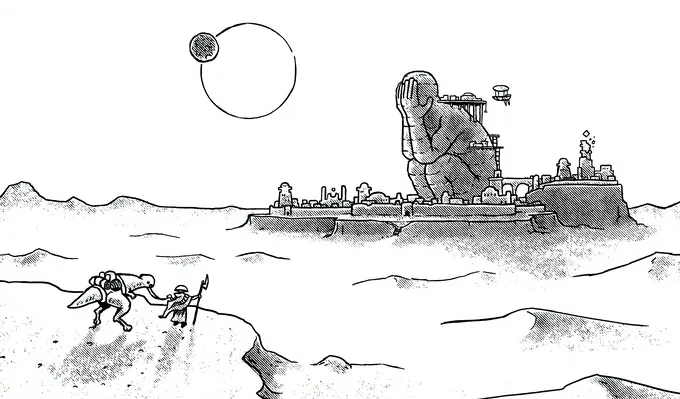
Ultimately, creating more games is good for its own sake. All games are not created equal, but there are also innumerable ways to be perfect. The Electrum Archive is the perfect capstone project for the OSR. Much like its undead patriarch, I hope this setting eternally lumbers on, sharing the idealized pleasures of an increasingly distant past with a new generation of tomb robbers.
…but I’m going to go back to prepping my Girl Frame game now.
————————————————————————————
Our slow drift toward board games continues.↩
“Pack Mule Games” are problem solving, world-forward systems gritty enough for their optimal strategies to mirror those of the real world - networking, capital ownership, and contracted labor.↩
“Did you find any treasure?”, “Did you complete a goal?”, “Did you learn anything useful about the world?”, “Did you establish a meaningful relationship with a faction/NPC?”, “Did any of your characters survive being on Death’s Door?”↩
There is a 1/10 chance of gaining a permanent connection to the spirit realm instead of a debility, though. I adore games with the confidence to let the rare outcomes actually be rare.↩
I’ve always been a Bethesda hater, even during the peak Oblivion & Skyrim days, and history has fully vindicated me. Why did y’all tolerate literally everything being a shade of brown. Why should I care about an open world populated exclusively by dirty, humorless facsimiles of life. Come at me.↩
It’s not subtitled “Issue #2”, it’s subtitled “Issue #02”. He's expecting the issue count to reach two digits.↩
Fully recognize that I’m spitting into the wind by asking an OSR GM not to tinker with their system, but c’mon I’ve got to try.↩