People Walk Too Fast
Your Hexcrawl is Too Realistic
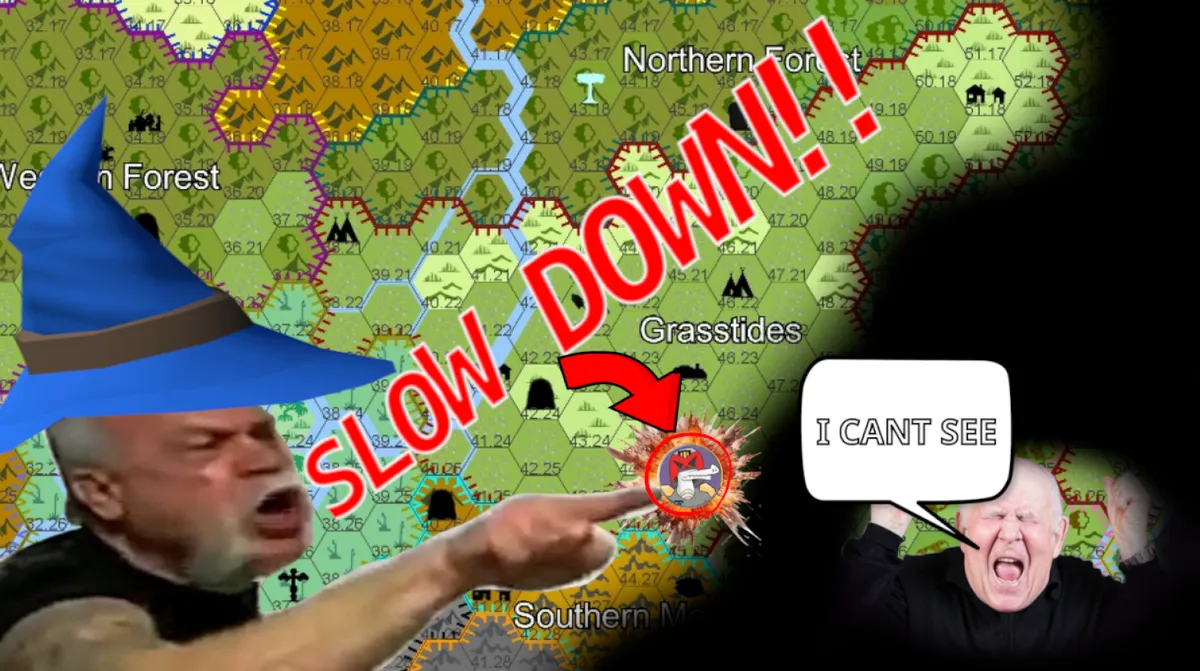
An average adult can see 3 miles away on an unobstructed horizon. That same adult takes about 1 hour to walk that same 3 mile distance.
I learned these facts because they’re frequently invoked to justify the verisimilitude of hexcrawl procedures. Both the 6-mile hex and its critics rest their arguments, in part, on the 3 mile sightline. Most retroclones inherit the 24-mile per day travel pace from D&D, because (3 mph x 8hrs) = 24 miles. A plurality of NSR travel procedures have since settled on “three 8 hr watches”, moving one hex per watch, as the default.1
In any remotely realistic hexcrawl system, the party cannot see their destination when they start moving. Thus, for players to make informed long-term navigation decisions into unknown territory, they must have access to information beyond realistic human sight lines. We have many tools at our disposal to impart that information - rumors, tall landmarks, map fragments - but in my experience GMs usually pay insufficient attention to the amount of navigation info they are imparting. Despite playing in hundreds of West Marches games with dozens of different GMs, I have rarely been presented with the right amount of information to make travel decisions interesting.
What is the Most Interesting Amount of Hex Knowledge?
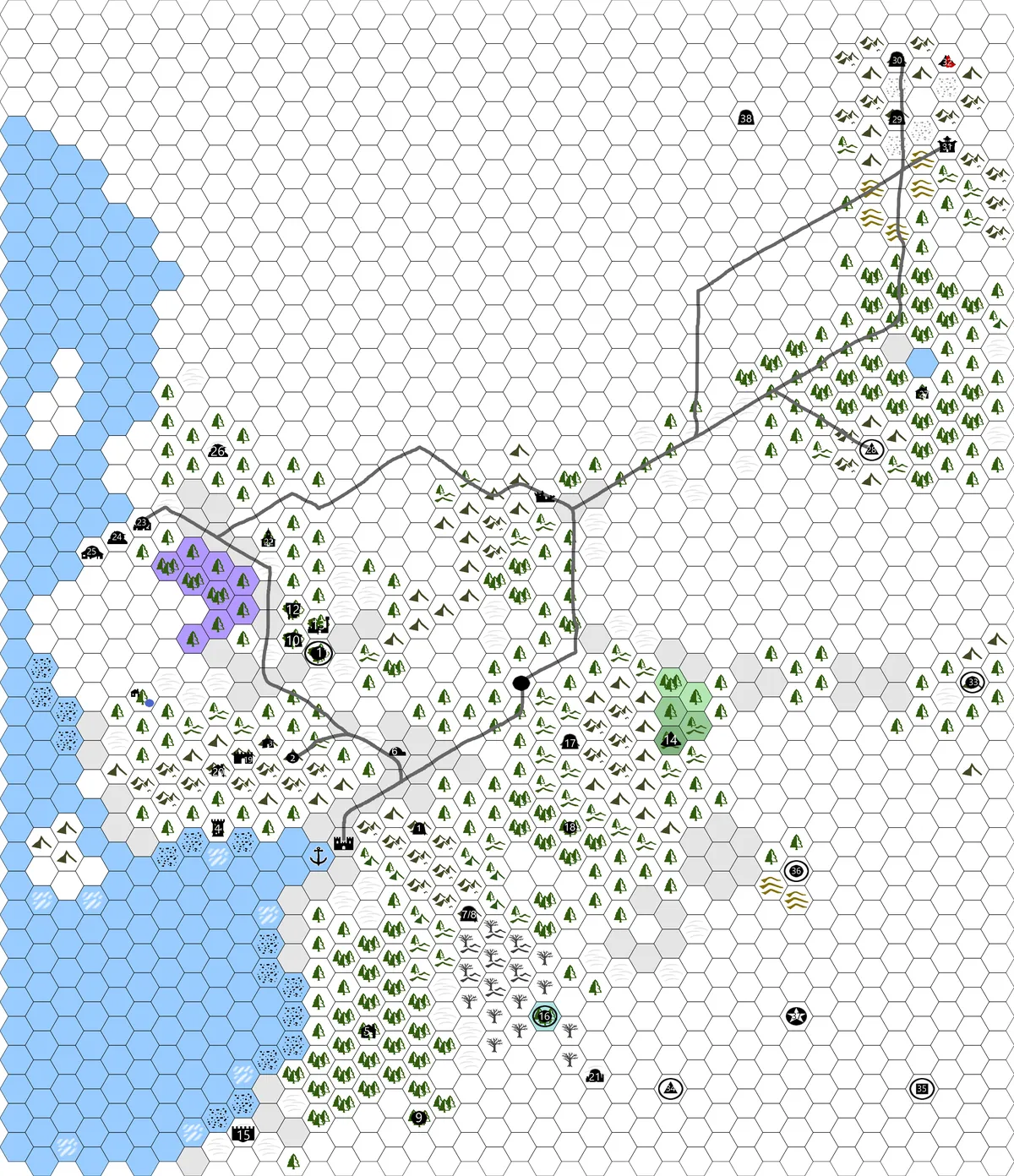
First, we can rule out the two extremes - perfect map knowledge and blind travel.
Because hexcrawls were historically married to progressive world generation procedures (in which the content of a hex is randomly determined at the moment players arrive) blind travel through a heavy fog of war is the way most hexcrawls are run. Until they reach any particular hex, players have no knowledge of that hex’s contents, save perhaps a rumor that functionally acts as a quest marker.2 Travel feels less like a strategic game than drawing from a deck of cards.
The ability to see into adjacent hexes is marketed as a solution to this problem, but is insufficient on its own for two reasons.
First, it still fails to enable proactive long-term decision-making. If the party knows its destination is within unknown territory to the northeast, they’re going to plot the most direct, straight line path to that location every time. They’re still permanently wandering a maze in the dark - stumbling upon barriers and moving around them in a rote, reactive fashion.3
Second, if the party can see into adjacent hexes, the GM now needs to describe at minimum four hexes during each move instead of one. It adds a meaningful administrative burden to the crawl procedure - not just for the GM, but for the player recording this information on the hexmap as well. “To the north you see… to the northeast you see… to the northwest you see…” etc. There’s much more room for miscommunication. Expanding the player sightline further to 2 or 3 hexes away in an attempt to promote player agency would only compound this problem.
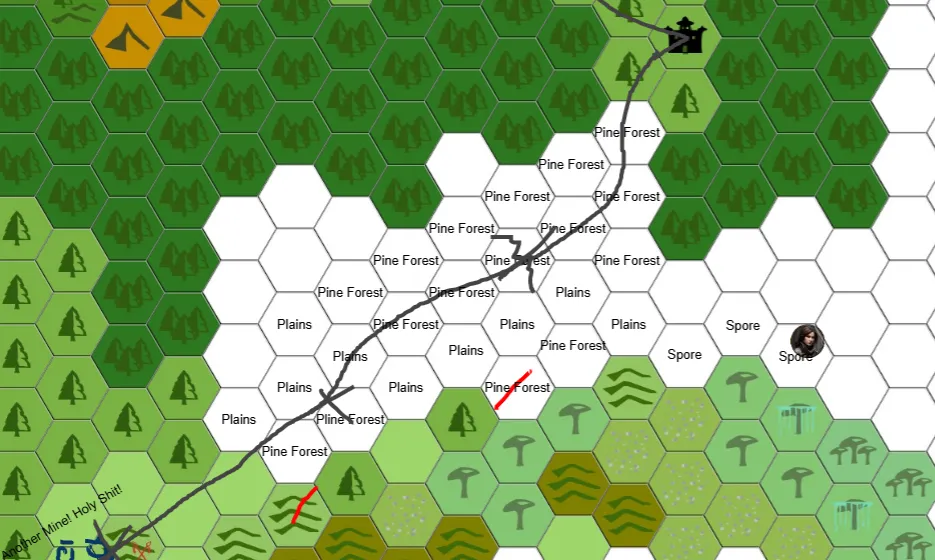
On the other hand, you could provide players with perfect map knowledge - an end-to-end map of the world. While in principle this would seem a preferable alternative to ignorance, in practice this invites analysis paralysis. More importantly, we can all feel a sense of something lost here, right? No discovery, no surprise - where’s the sense of adventure? Having a horizon to push forward is crucial to the hexcrawl’s appeal.
So where’s the happy medium?
Exploration is the Gamification of Learning
For a hexcrawl to be fun, players need:
- An actionable long-term Goal. (Ideally, multiple mutually exclusive goals.)
- Interesting choices between Plans which fulfill that goal.
- A steady drip feed of Discoveries that force the party to reassess their plans and goals.
Goals, Plans, and Discoveries - these are the three necessary components to create the kind of improvisational exploration play that so many GMs aspire to. I think this is an accurate description of what's happening in the brains of players when they reach a flow state in popular video games like Skyrim and Breath of the Wild. Most TTRPGs fail at the second step - they don’t give players enough information to make interesting plans. So to fix that problem, you need to give players large chunks of new information at one time. You need to give them a problem to solve.
Horizon Design
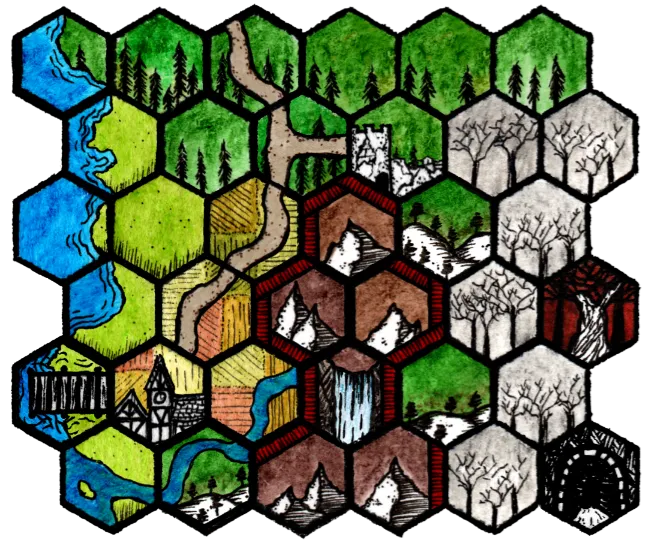
Take your world map and divide it into a series of regions (nations, mountain ranges, poison swamps, etc). Keep these region maps relatively small 4 and give each a unique navigation challenge. Add unique hexes on those maps (cities, ports, highways, or teleporters) where the party can embark on long-term travel to other regions - journeys lasting a week, a month, or more. Reveal all terrain for a given region the first time the party arrives there.
Do not give your players an objective world map. Give them at most some rando’s best guess at the shape of the world, ideally drawn by hand in under a minute. By refusing to connect region maps directly and explicitly not giving the party perfect information about the world as a whole, you are giving yourself the option to add in new secret regions later anywhere you want, whenever you want. Preserve the world’s sense of mystery.
Within each player-facing region map, Include only basic information about terrain and major landmarks in every hex. Give some hexes hidden information that is only revealed when the party is adjacent to that hex. This could be a bandit hideout, a dungeon, or even outdated info on the player map. Perhaps an ogre knocked down the bridge, forcing the party to find another river crossing. Revealing region maps all at once will massively cut down on mid-session cartographic busywork while still preserving that all important sense of discovery.
When creating navigation challenges, use verticality, bodies of water, and other extreme hazards to create hard barriers and interesting friction. We’ve gotten a lot better at hexcrawl level design over the last five years - I particularly recommend Arnold and Warren’s posts if you need guidance.5
Lastly, if learning about the region map automatically upon arrival strikes you as too arbitrary, there are diegetic solutions available for you to apply instead.
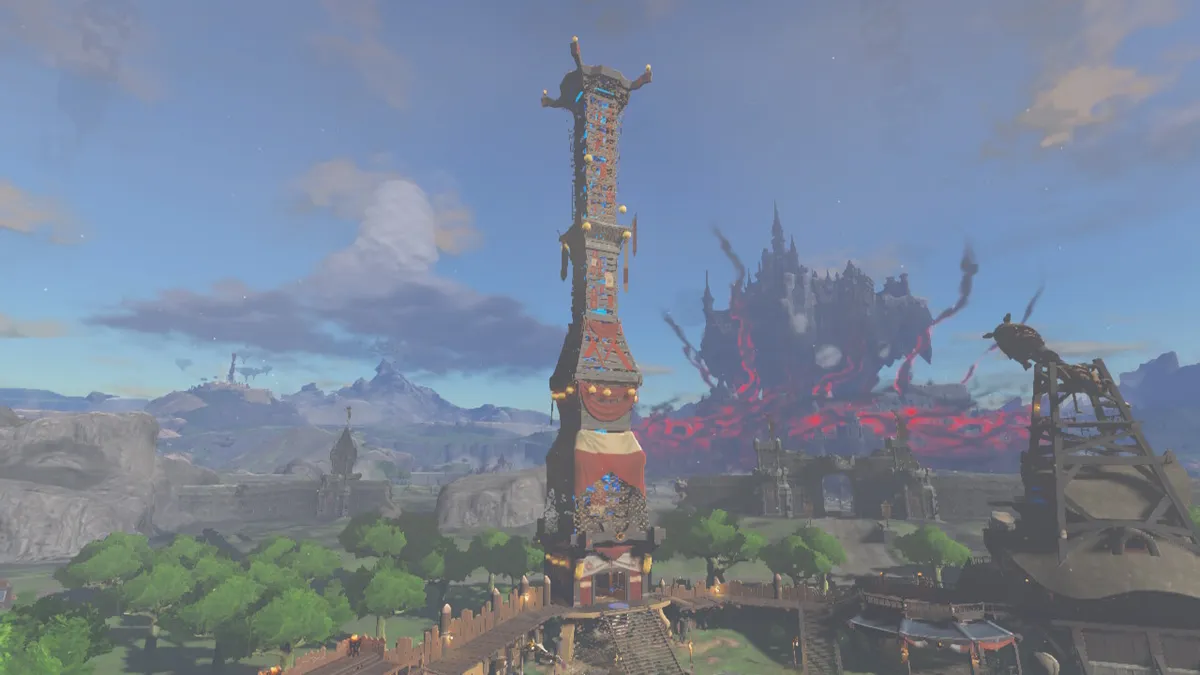
Ubisoft Towers
Look, you brought this on yourself.
Yes, this trope is overdone, but there’s a reason it’s overdone. Giving players the option to choose when and how they acquire information needed for long-term decision-making is fun. Moreover, because TTRPGs have a GM that can describe interesting features of the surrounding environment instead of relying on the player themselves to physically look the right direction, we have much more leeway in the implementation of the trope.
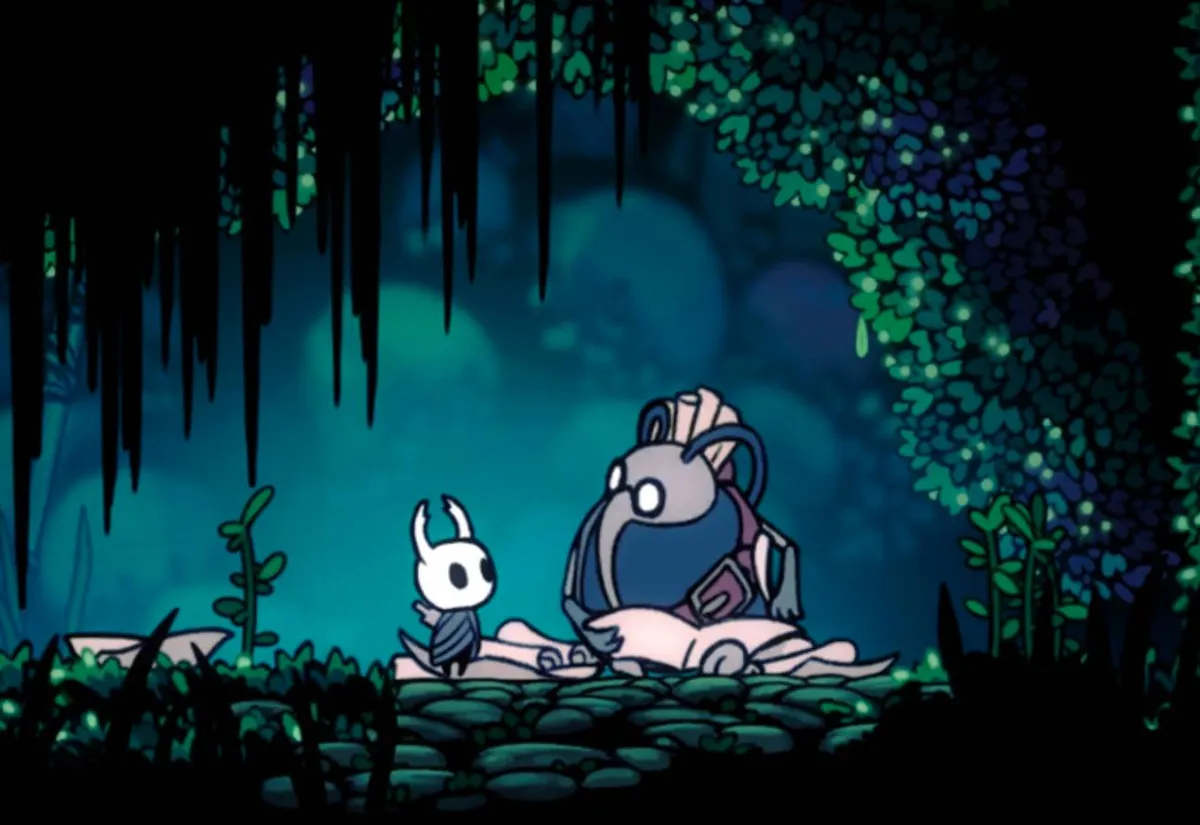
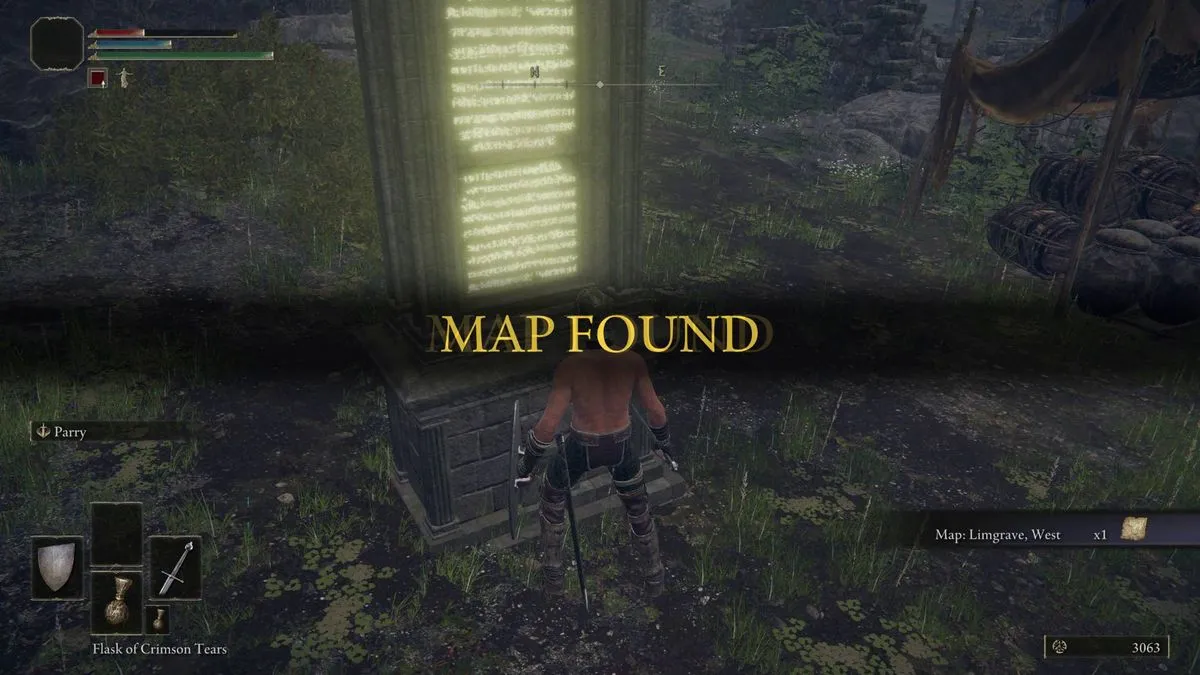
You don’t need a literal tall building. Add a weird wandering little map guy who’s constantly in need of rescue, or a glowing eldritch totem that infects your mind with cartography. It can be anything your heart desires, so long as it’s quickly visible to the players when entering the region.
The Elephant in the Room
Why am I putting in this much work to make ancient Hexcrawl procedures built for war games and survival simulators fun, when most people could accomplish these game design goals more easily using a pointcrawl?
Three reasons.
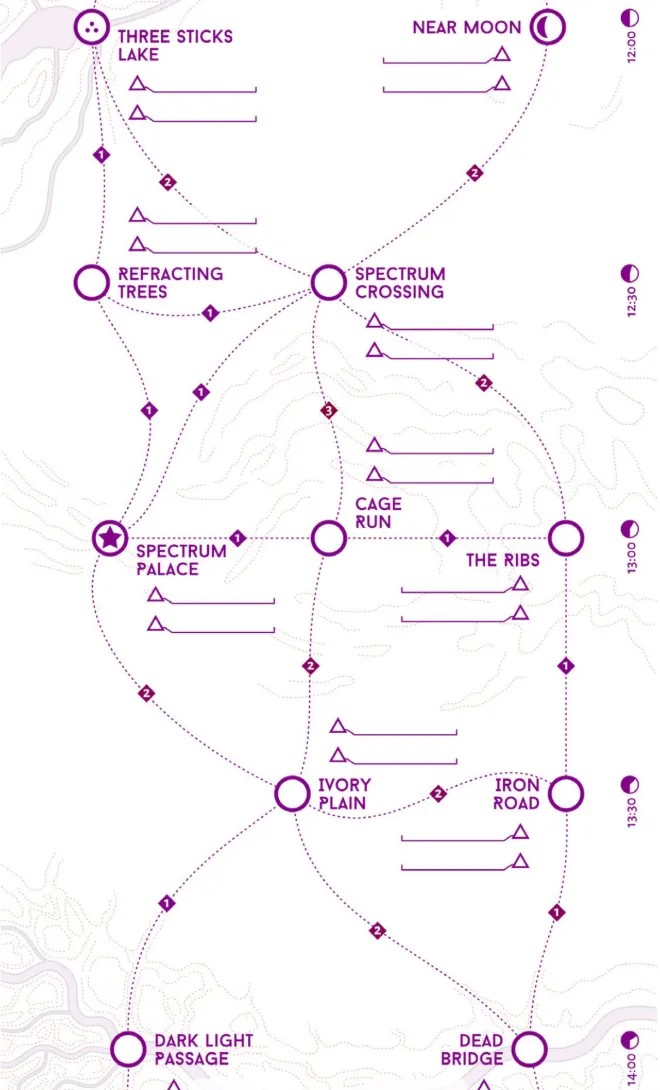
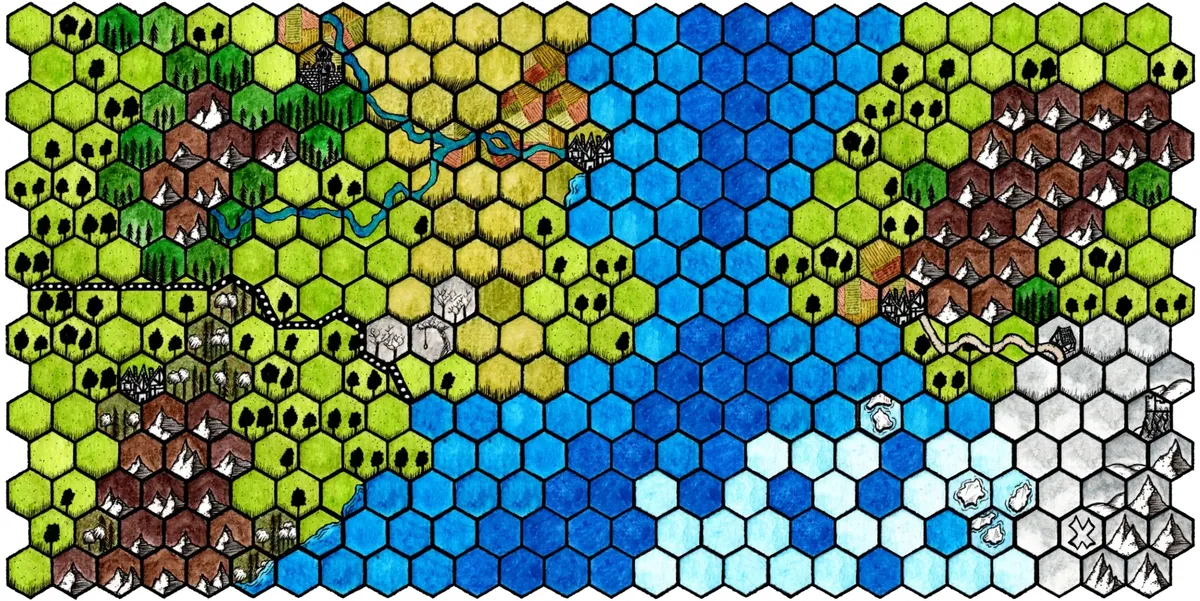
I just straight up have an aesthetic preference for hexmaps. Come on, scroll back up, look at that little map I made! Hexes are just so immediately evocative of adventure and wonder. Crucially, the parts of this map that are beautiful are also the parts players can choose to travel to. Most pointcrawls are represented as line diagrams superimposed atop cool maps, which gives the impression of being ferried along the track of a Disneyland dark ride. Hexmaps merge “where you can go” with “the stuff that is pretty”.
Hexmaps automatically communicate a player's immediate surroundings. Pointcrawls with random travel encounters often trigger those encounters while players are traveling “along the lines”, which leaves their surroundings ambiguous. I, as the GM, now have to spend extra table time clearing up that ambiguity.
I can’t draw. Hexmap generation tools help me make a neat artifact I can print out and show to my players. Creating line diagrams is much easier, and in some cases more thematically resonant, but they’re never the sort of thing I’d want to hang on my fridge. I’ve never seen a pointcrawl generator that also produces the art that goes underneath the points and lines.
Embrace Abstraction
The majority of your audience does not care if your overland travel accurately represents the speed and difficulty of a historical medieval march. Just like with sword fighting itself, players want your travel abstractions to reflect the romantic idea of travel they have in their head - not the objective reality. The historical wargame practice of using hexes as a ruler overlaid atop real maps has led designers toward rules heuristics based on realistic human limitations that were never designed to create compelling games.
While I suspect there are many ways we can improve hexcrawls by abandoning verisimilar sacred cows, Horizon Design - being more intentional about how much of the world we reveal to players, and why - seems to me like the lowest hanging fruit.
Now go find your own simulationist bugbears to slay.
————————————————————————
Dolmenwood, Mythic Bastionland, Cairn 2e, and Perils & Princesses all match this template. Knave 2e and Errant zoom in with six 4hr watches and a soft limit of 3-4 travel actions per day. Mausitter reverses that math into four 6hr watches... but you’re playing mice, so the hexes are shrunk to 1 mile. Most watch systems are hex-size agnostic (a trend I support), but I have never encountered a system that allows players to see further than one hex away - presumably for the pragmatic reasons I describe later.↩
I am assuming from here onward that the hexmap is being used as a game board, instead of a ruler, because I have never met anyone under the age of 40 who prefers within hex movement. If you are this person please god let me know on Bluesky, I want to gawk at you like a zoo animal.↩
I can see the appeal of fog of war navigation as a change of pace - a way to make your players feel disempowered in your spooky forest, say - but as the default navigation method that tension will dissolve over time as the party treats their lack of agency as the default.↩
I’d start with a 10x10 hex hard limit, and aim closer to 6x6.↩
Warren and I came to the same “connected regions” conclusion independently - he outlines my approach almost verbatim under “The Hexcrawl Pointcrawl Combo 3000” in part 2 of his hexcrawl checklist. Instead of stealing the idea from him, I stole it from Salvage Union’s “nested pointcrawl” travel rules.↩