I was Wrong about Hirelings
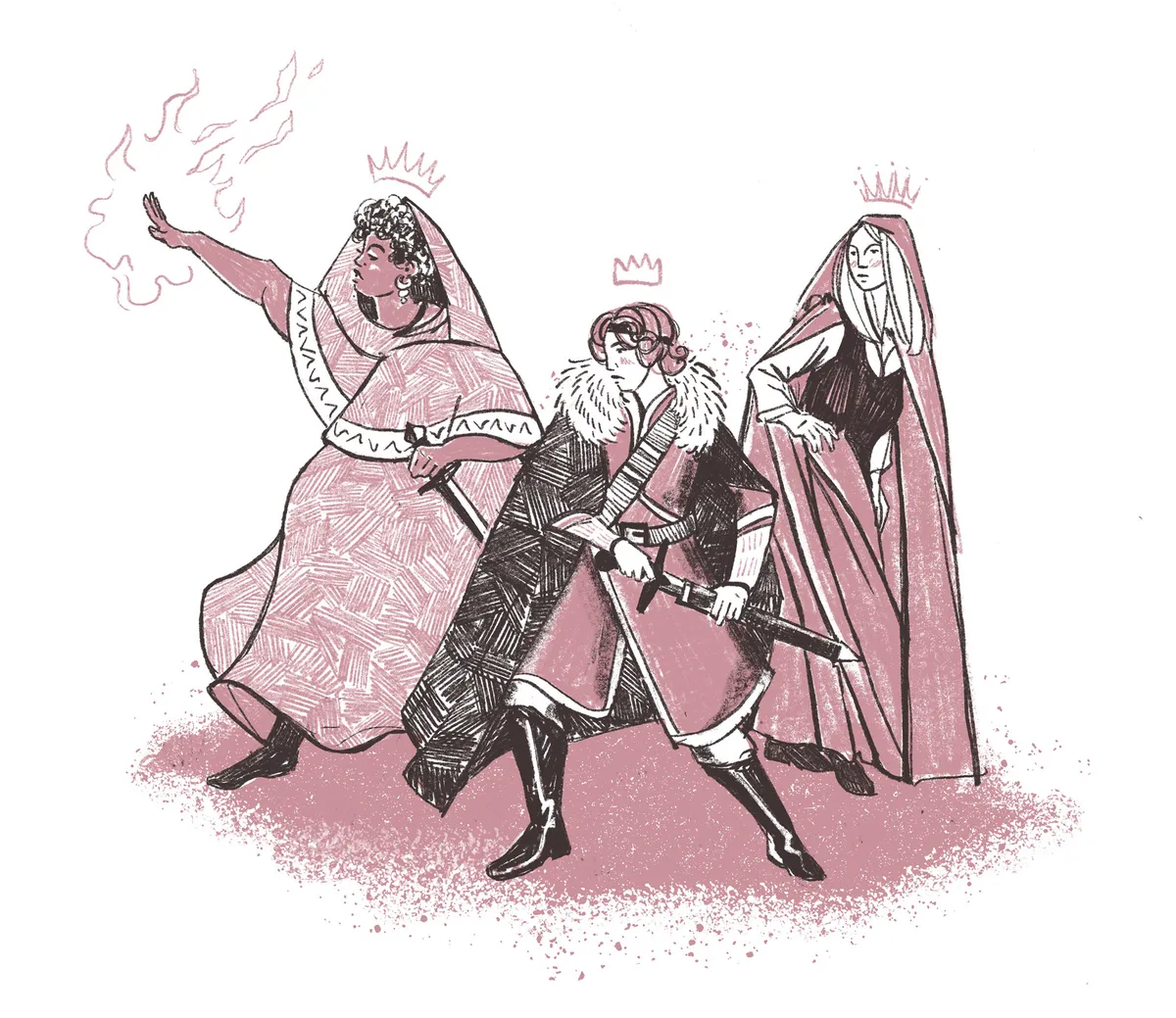 Credit: Ryan Lynch, for Perils & Princesses
...
So to explain what all this is about.
My Problem with Hirelings
I play RPGs to watch, closely and intimately, as characters the table is enormously emotionally invested in tumble down a fantasy-shaped Plinko board.1 I want to put human agency in a body weak enough to be familiar, then pit it against the arbitrary cruelty of monsters real and imagined. These games are a ritual that indoctrinate me into believing that good people are more powerful than fate.
The hireling systems I’ve previously played with were all aggressively simplified - because I have a preference for lightweight games, and because a lot of my GMs understand the philosophical arguments in favor of hirelings more than their procedural nuances. None of my friends played AD&D. Here’s a truncated hireling list from the Swords & Wizardry game I play in.
Mercenaries
- Chuck - Bowman, 6gp/week + full share
- Adelhard - Infantryman (light), 4gp/week + full share
- Rowena - Infantryman (heavy), 12gp/week + full share
They’re a weapon with a name players feed gold to control. Often literally listed in the ‘Equipment’ section of the rulebook. When the crawl starts, they don’t talk. The way the more Grognardy side of the hobby talks about hirelings - as meat shields, swarms, and cannon fodder - tricked me into thinking that all hireling systems were supposed to feel like hog markets for disposable human beings.
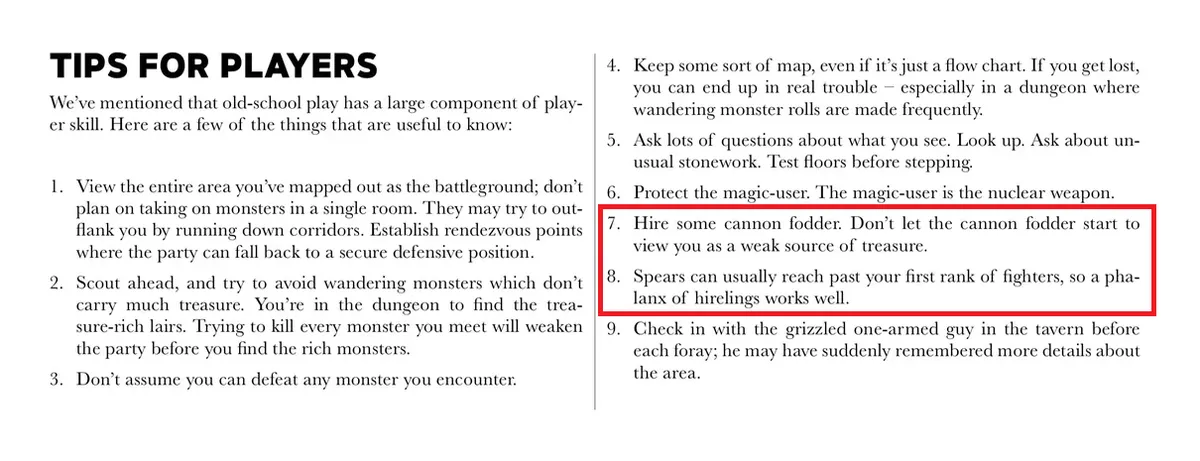 From: The Quick Primer for Old School Gaming
Why would I want to give my players the option to outsource the “inconvenience” of life-or-death adventuring drama to characters we’ve all (for some reason) agreed we don’t care about, for the privilege of quadrupling the number of combat turns?
The more you tip the scales toward “the PCs are normal relatable people”, the more you’re lessening the gap between those characters and the average guy on the street. The smaller that gap is, the more productive it is for a PC to be a corporate manager instead of a hero.2 Hirelings felt to me like a loophole that optimizes the fun out of grounded settings by substituting D&D for the wargames it evolved from.
A few games solve this problem by flat-out forbidding followers that act like PCs - sometimes justified by a dissociated mechanical fig leaf.3 Others create some stilted quirk of the setting that prevents large groups from traveling together.4 Both options fail to satisfy me. I want a believable, broadly applicable, diegetic explanation for why optimal play often requires PCs to delve themselves instead of hiring others to take on the risk.
My Deliverance came from the Blogs
As it so often does.
A kind acquaintance pointed me toward Gavin Norman’s retainer recruitment procedure.
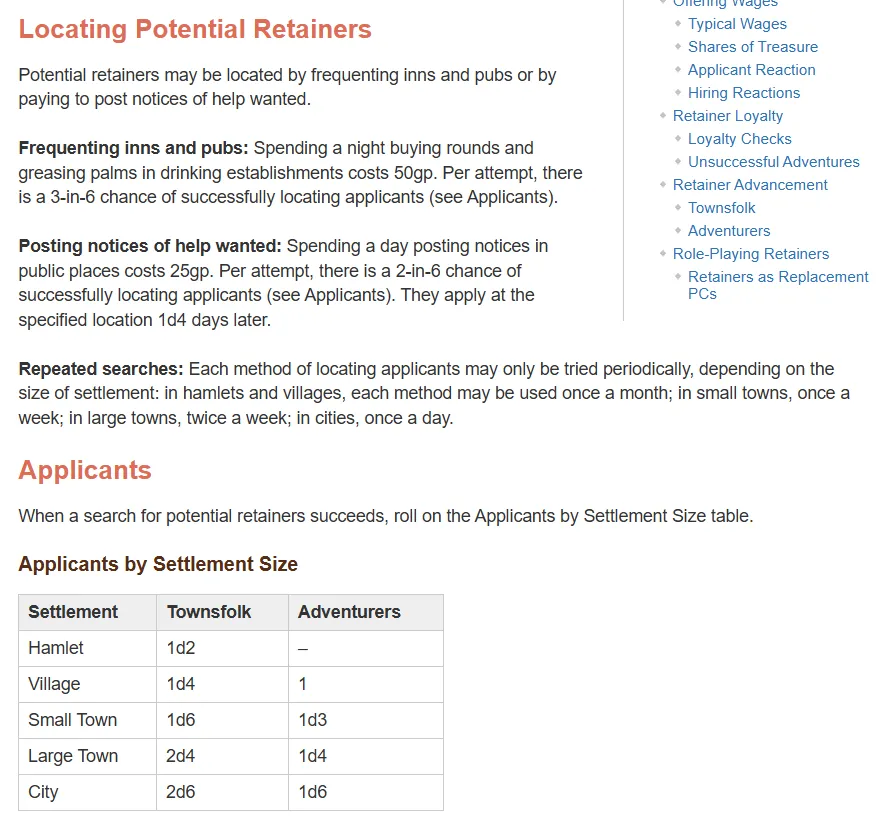
Fiddly as all get out? Absolutely. But also grounded in the expensive, irritating realities of the hiring market, from the employer’s perspective.5 (Hiring is my day job, so I’m quite familiar!)
Advertising is costly, qualified applicant pools are shallow6, and interviews are slow. This procedure is grounded and relatable, and it adds just enough friction through time and gold costs to keep players from treating hirelings like equipment. My favorite component is the “Applicants by Settlement Size” table, which caps the number of “adventurer types” available to hire in any given community to the low single digits. No faceless peasant armies to gum up initiative! Each time a new retainer joins you, the table is going to take a beat to play out how you met them, how they act, and what they want from you. Giving that new companion the space to introduce themselves is worth the crunch.
I’d assumed at first that this procedure came from Gavin’s own experiences with small business hiring, but no - turns out it’s a modernized translation of rules straight from page 35 of the AD&D DMG! Gulash wrote up a full breakdown of AD&D’s hilariously nihilistic hiring process last year. It’s bloated and unusable of course - but a fun bit of archaeology.
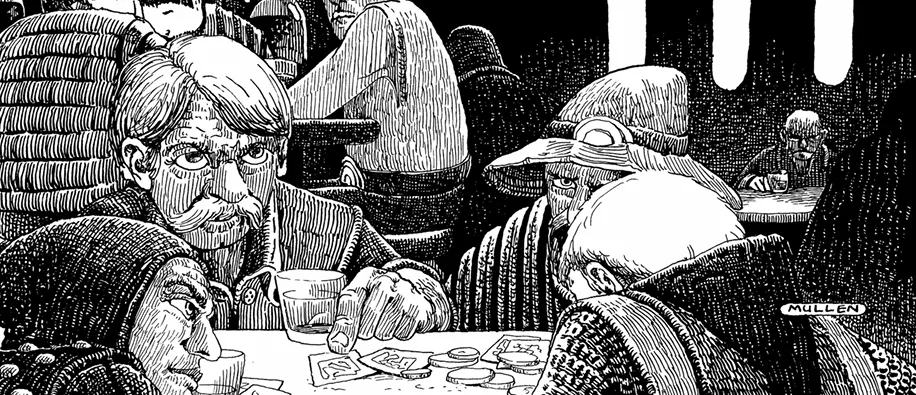 Credit: Peter Mullen for Knave 2e
Okay, but how do you make Hirelings Fun?
The same way you make any other character fun, of course. You ask your friends to roleplay them as an extended bit.
Write up a little notecard with a name, a sentence or two of characterization, a couple belongings, and - if you’re feeling really spicy - maybe a secret hidden role prompt too? Maybe Greg the Spearman had a traumatic prior outing, and is therefore convinced that one member of the party is secretly a vampire. Maybe Greg has a cursed ring, refuses to say the word banana, and is trying reeeeeal hard to make someone else say banana out loud for some reason. Hell, maybe Greg is crazy for completely normal reasons! Maybe he’s just trying to sell you his goat, and gets noticeably insulted when you turn down the offer.
Treat what you’re handing out more like an improv prompt than a statblock. Don’t even write bespoke ability scores if you don’t feel like it - standardize starting stats amongst retainer types instead. Just make sure you’re giving whichever player chooses to RP them some juice to work with. That notecard should feel like a GM-sanctioned permission slip to be weird, not a new spreadsheet to manage. A new character shaped car to crash. We all know it’s the weirdos players grow attached to anyway.
Reserve screen time for the companions, then let your players give them a soul. Couple that with realistic recruitment limits that keep warbands from becoming an impersonal dominant strategy, and I'm willing to give hirelings a shot.
————————————————————————
I love building the Plinko board. I hate moving the pegs of the Plinko board while the pucks are in motion. When you as the GM impose upon yourself the responsibility to optimize player experiences in real time, at the table, the activity we’re involved in stops being a game in some crucial sense I struggle to define.↩
In the words of JoFrank - “Do you want the super power end game or the management sim end game?”↩
His Majesty the Worm (pg.34), and all the games that inherit the Charisma mod companion limit; Electrum Archive Issue #02 and Knave 2e come to mind.↩
The fog in Fatherfog.↩
I now appreciate why so many OSR Hireling systems distinguish between Hirelings/Specialists and Henchmen/Companions - the former is a one man business of which you are the customer, and the latter is a gig worker the party is hiring. Retainers would only be easy to hire in a setting that treats adventuring like a stable career, so… yeah no thanks. (Sorry Serket.)↩
Because entitled employers often define “qualified” as “perfect”.↩