Are Feelings Prep?
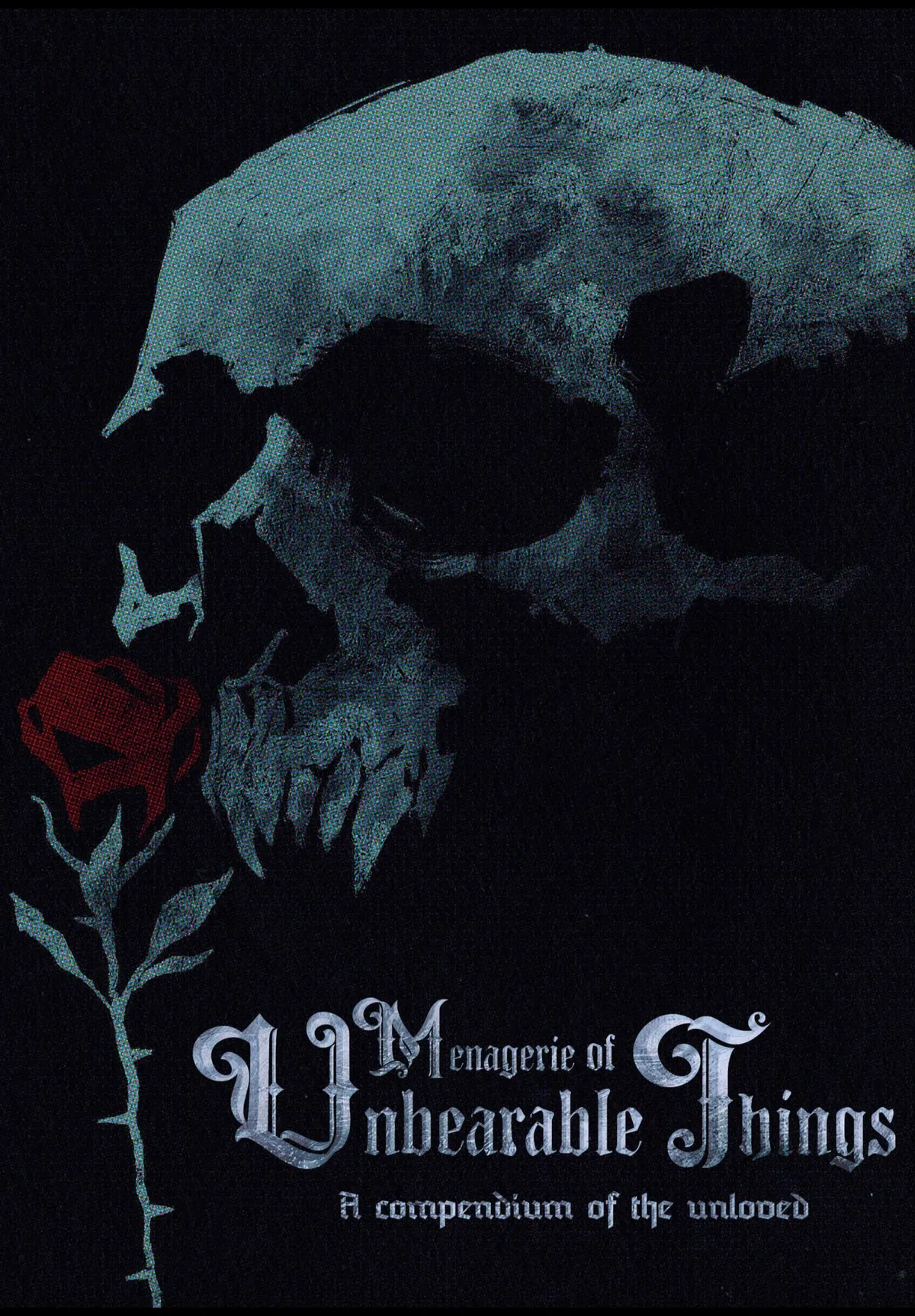
Menagerie of Unbearable Things is a heartbreaking 132-page full-art storybook that Tania Herrero insists is a bestiary.
Its original subtitle - pictured above but replaced by "A bestiary of tragedy" in print - better conveys the book’s purpose despite being far less marketable. I sympathize; this is a difficult work to categorize. Those familiar with her prior work - most notably Crown of Salt and The White Horse of Lowvale - will understand the pitch immediately. Menagerie’s page count is entirely devoted to the gorgeous storybook interludes that set Tania’s prior adventures apart.
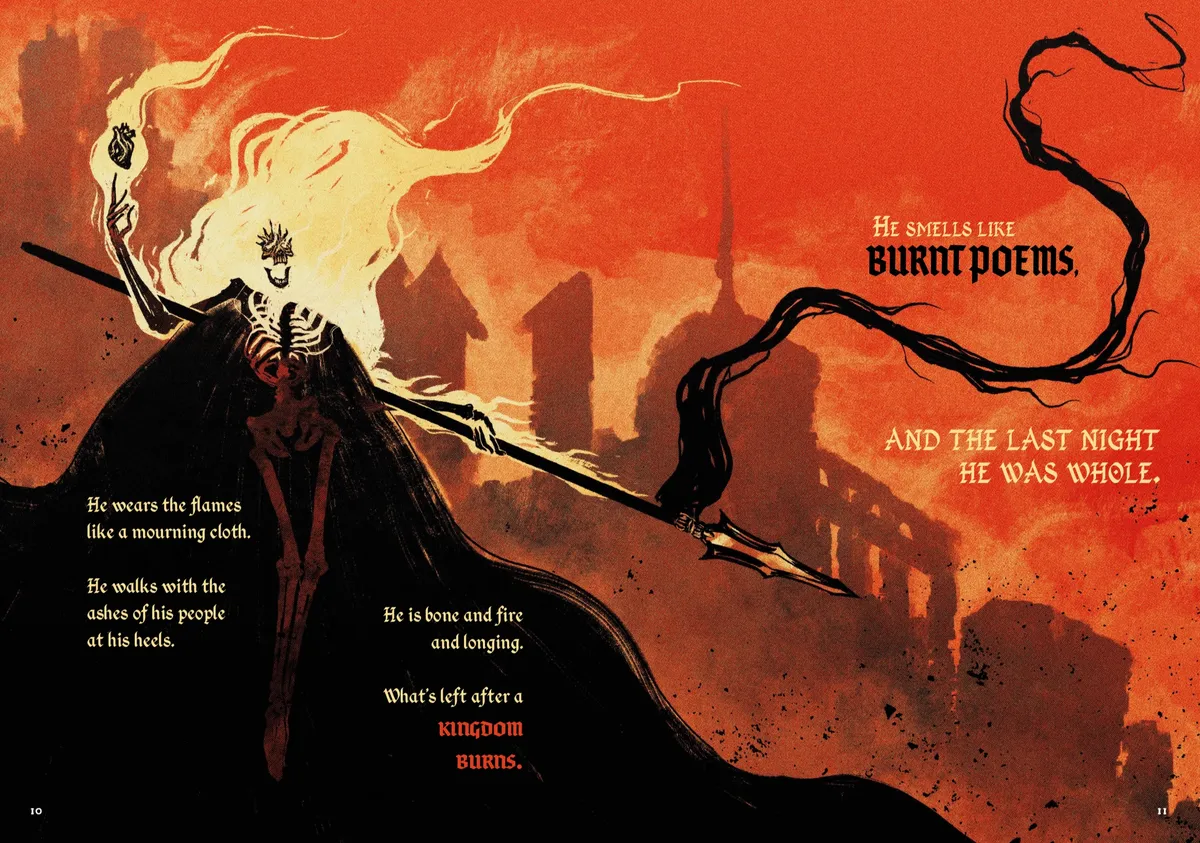
There are seven stories in total, each around twenty pages. Five sentences per page at most. All are accompanied by a trio of quest hooks painted across a two-page black-and-white spread.
I’ll not spoil the tales within, but I will say that the book is obsessed with the consequences of deeming others unworthy of love. It hurt me in ways I found familiar.
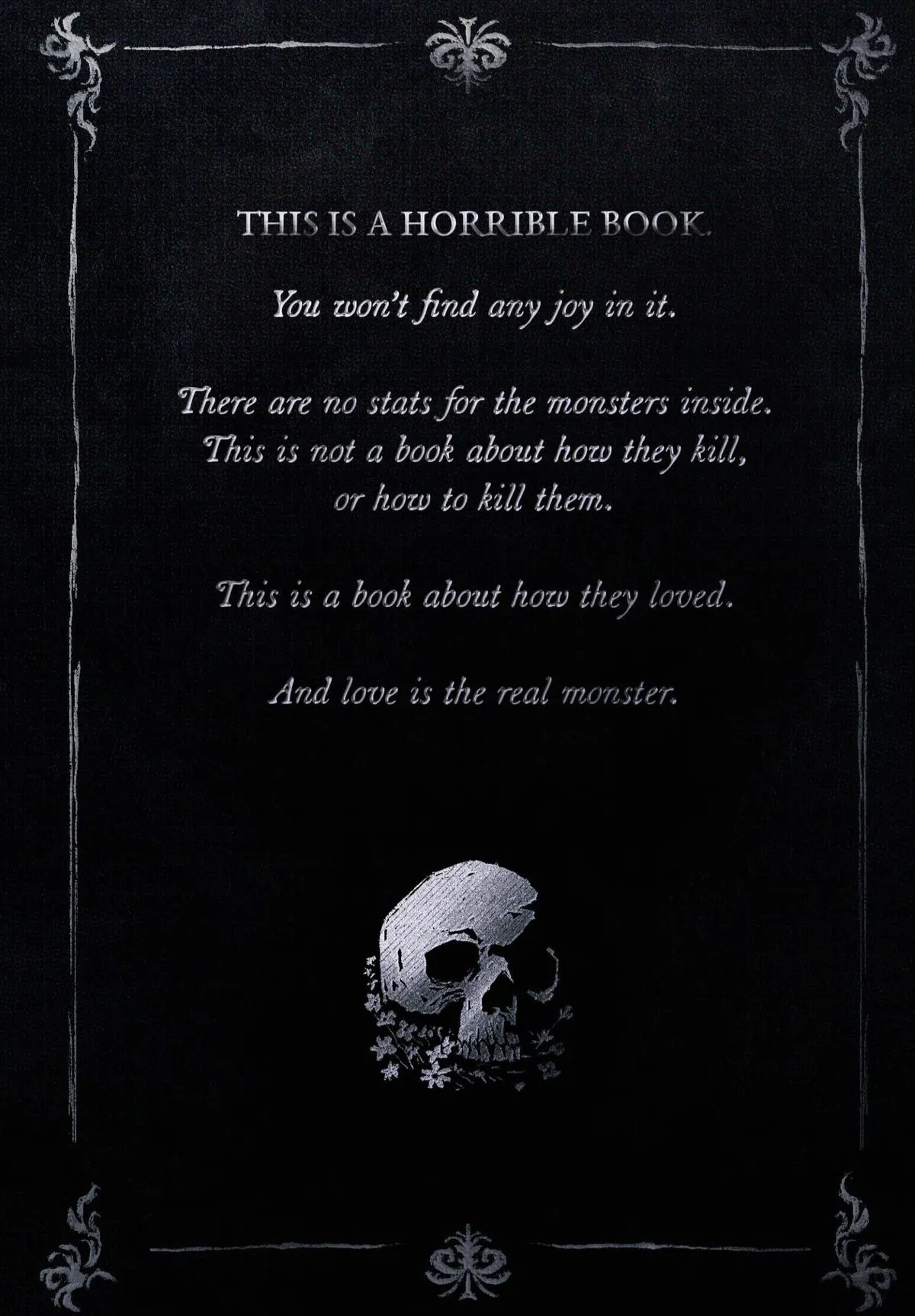
Hooks aside, these are not modules or adventures. The book never references dice, scenes, or mechanics. A few locations can be inferred from the stories, but they are never detailed. There is no attempt to translate the stories being told into a game. Every word of this book, save its back cover, is a description of its fiction. It never breaks character.
On first read, my mind kept flashing back to Patrick Stuart and Scrap Princess’s collaborations. Tania’s blooming auteur style is every bit that pair’s equal, but she’s entirely discarded the mid-OSR obsession with at the table utility. Patrick’s verbosity often bordered on a vice - he forced insane ideas into your head with manic emphasis, detailing very precisely how players should invoke his horrors.1 Tania’s poetic brevity is his stylistic opposite, despite their shared mastery of evocative language. Fire on the Velvet Horizon paints in words what Tania literally paints.
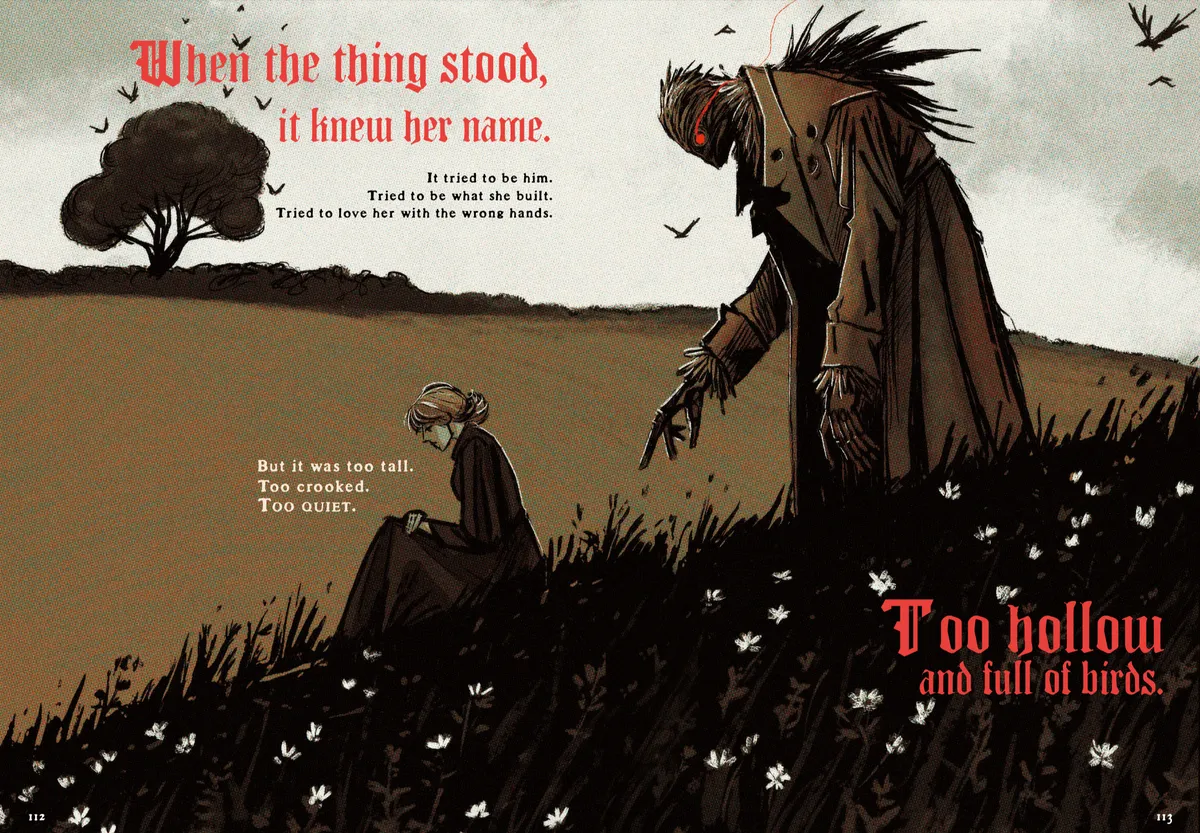
I had to seriously consider whether this book even qualifies as an RPG product that merits coverage on this blog. It explicitly doesn’t want to be held to the same standards as her prior adventures, but it also fails to meet the bestiary standards it asks to be held to. Menagerie neither translates monsters into a particular system’s mechanical language, nor offers the prep and scenario design scaffolding you’ll find in more rules-lite bestiaries like Skerples’s Monster Overhaul. This is a book about stories, not games.
Tania wrote this storybook for her previously cultivated audience of NSR book perverts, and she was right in assuming we would love it. This book is not what I ask for out of RPG products, but it is undeniably incredible. I shivered from its beauty. I seriously considered getting a tattoo of one of its closing lines before I remembered that quote tattoos are universally hideous.2
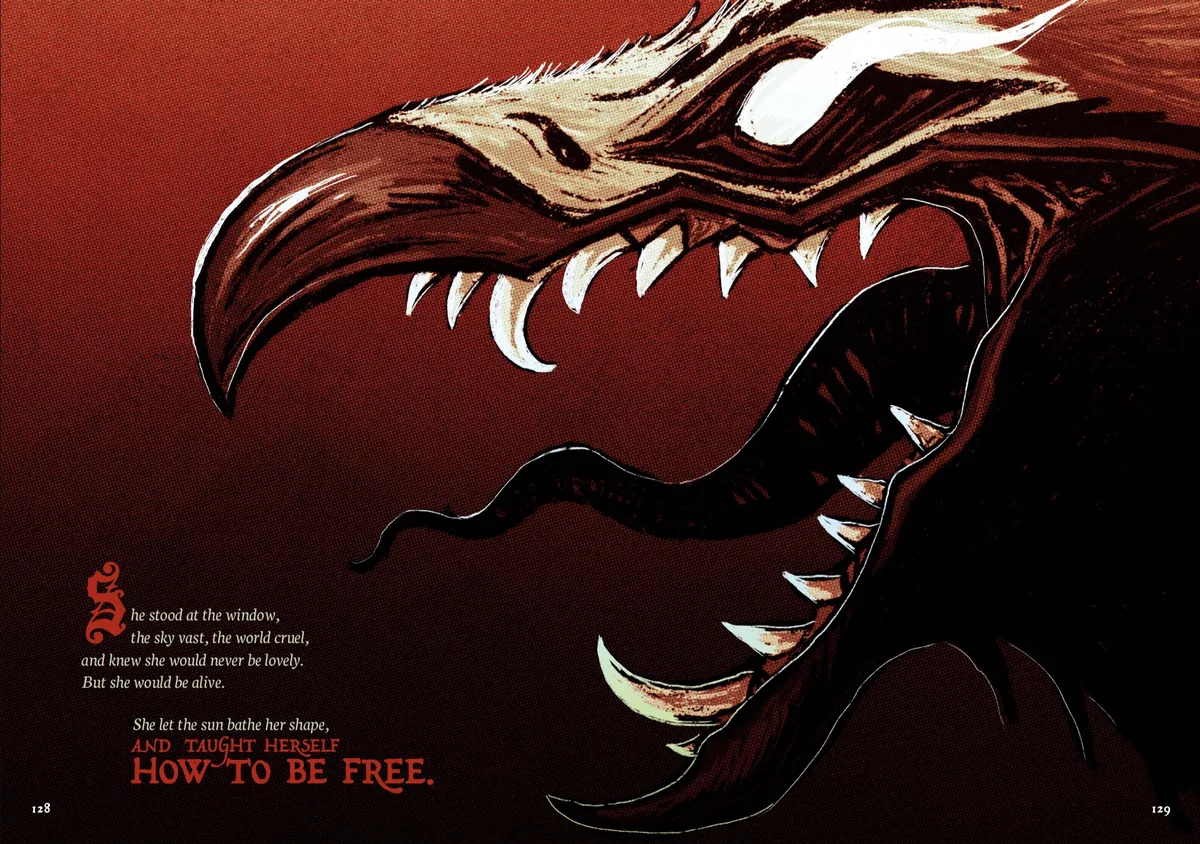
This book is not table friendly. You have to translate it in the same way you’d translate other works of fiction into the TTRPG medium, with all the legwork that entails. It fulfills a similar role in your prep as a good game of Microscope or the memories of your favorite novel. When doing that legwork, I suggest one of two approaches.
First, you could take the obvious approach and seed these monsters into your campaign as written, using the provided adventure hooks. In this case you’ll need to take care that each monster’s backstory does not become a forsaken easter egg. Mythic Bastionland feels like the ideal system, with its complementary gothic tone and omniscient exposition-friendly Seers. You’ll be left high and dry to design your own player-centric encounters, however.
Alternatively, you could abandon the existing quest hooks and break each story down into an escalating event timeline that players interact with concurrently.3 This of course opens the possibility that players successfully prevent the story’s looming tragedy, but in my experience, you should always kill your darlings to set your players free. Roleplay abhors a script.
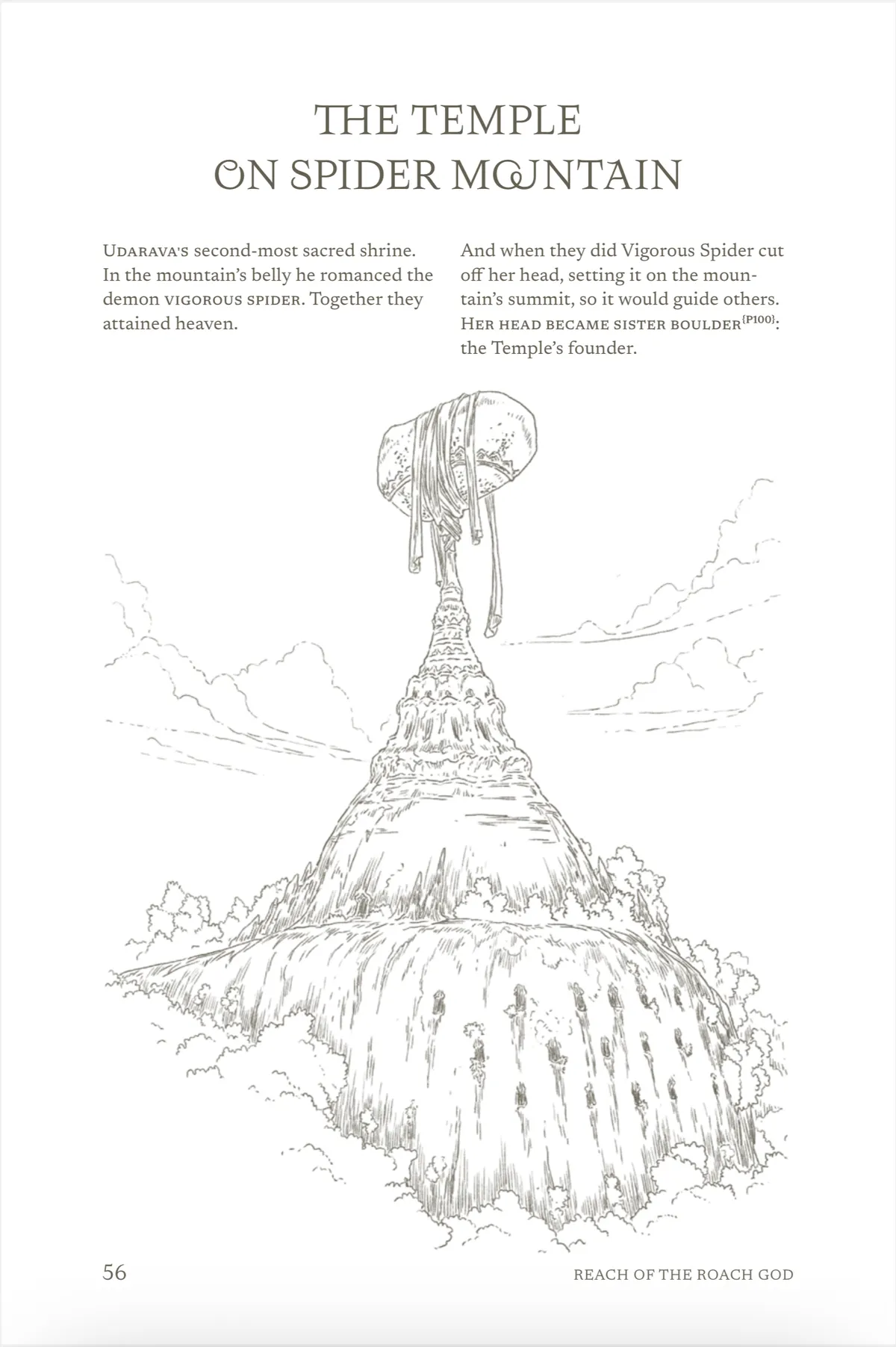
The best compromise between the kind of books Tania’s inspiration seems to be drifting toward and the kind of books her audience expect, in my opinion, lies in the careful system-neutral adventure layout popularized by A Thousand Thousand Islands (RIP). Its art carries the same careful weight as its words, and both are given ample room to breathe.
What Reach of the Roach God has that Menagerie does not is a sense of geography, the confidence to leave its narrative unfinished, and an understanding of which roleplaying abstractions are too useful to discard. Tania was right to recognize that the hexcrawl component of Lowvale was vestigial, but wrong to think that adventure design itself was the weight constraining her. If tabletop inspiration is the purpose of these stories, the maps Tania omitted will eventually be drawn - she’ll draw them, or I will. I know from experience that she will do a much better job.
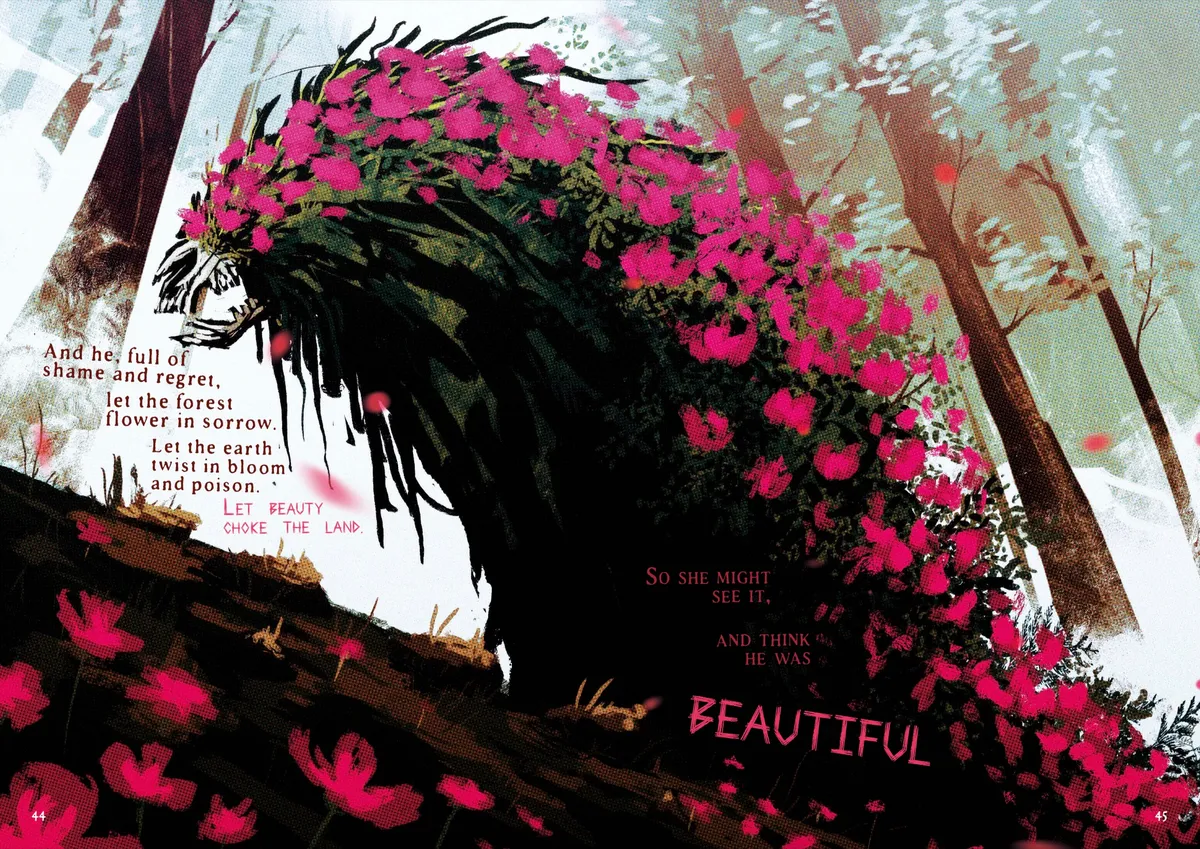
This book’s stated aspirations are incoherent.4 “Inspiration for a roleplaying game” isn’t a genre; it’s a reaction nerds have to art. There is no one feature shared by the disparate art we label ‘inspirational’. Their only similarity is the way great art leaves its impression within us.
I will carry this book’s impression for many years to come.
$47 hardcover, with a supplemental art-only PDF. $21 for an outdated PDF which still has the better subtitle. Buy it quick, before she notices!
————————————————————————————
“The ideal situation is to allow the PCs to move past his position or have him come up behind them, then drive them forwards…” Deep Carbon Observatory, pp. 68. “When it dies, if it dies, tear out this page. Take it outside. Burn it. There can never be another AntiPhoenix in your game, or any of your games, ever again.” Veins of the Earth, pp. 21.↩
This is bait to see if my sister reads my blog. This book would be such a good birthday gift for you please god don’t read this post please.↩
Week 1: “The King finds the Frost Lipped Girl”, Week 2: “The King burns the tapestries to keep her warm”, etc.↩
I’m hedging my bets with “stated” because I do think there’s a chance this whole enterprise is a subtle attempt to trick dorks into funding the arts. If so, bravo.↩